
 Nobuaki Sato



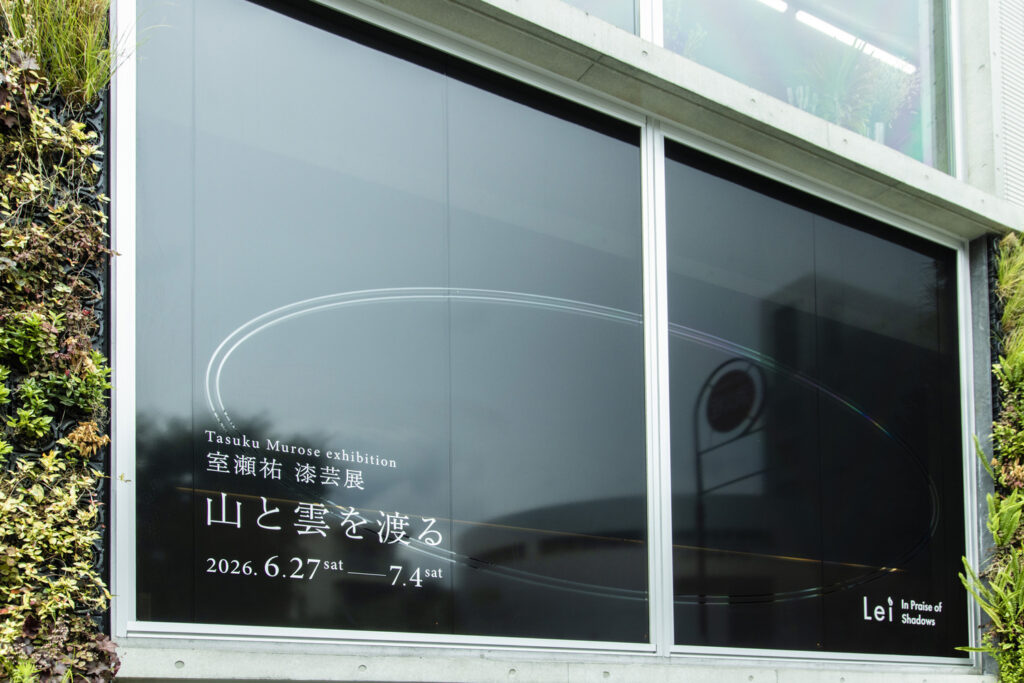
From June 27 to July 4, 2026, Lei Gallery Tokyo presented Crossing Mountains and Clouds, the first solo exhibition by urushi artist Tasuku Murose.
Once the works left the studio and met an audience, Murose began to see aspects of them that had remained invisible during the making.
Looking back on the exhibition, he reflects on uncertainty in the creative process, and on what became visible only after the works encountered an audience.
Tasuku Murose
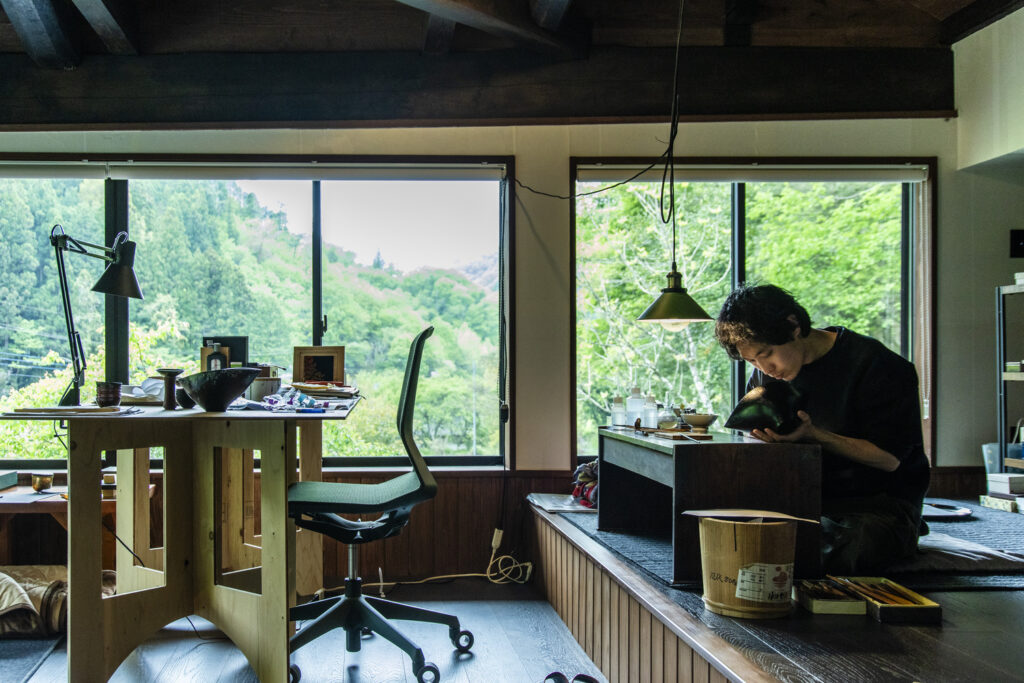
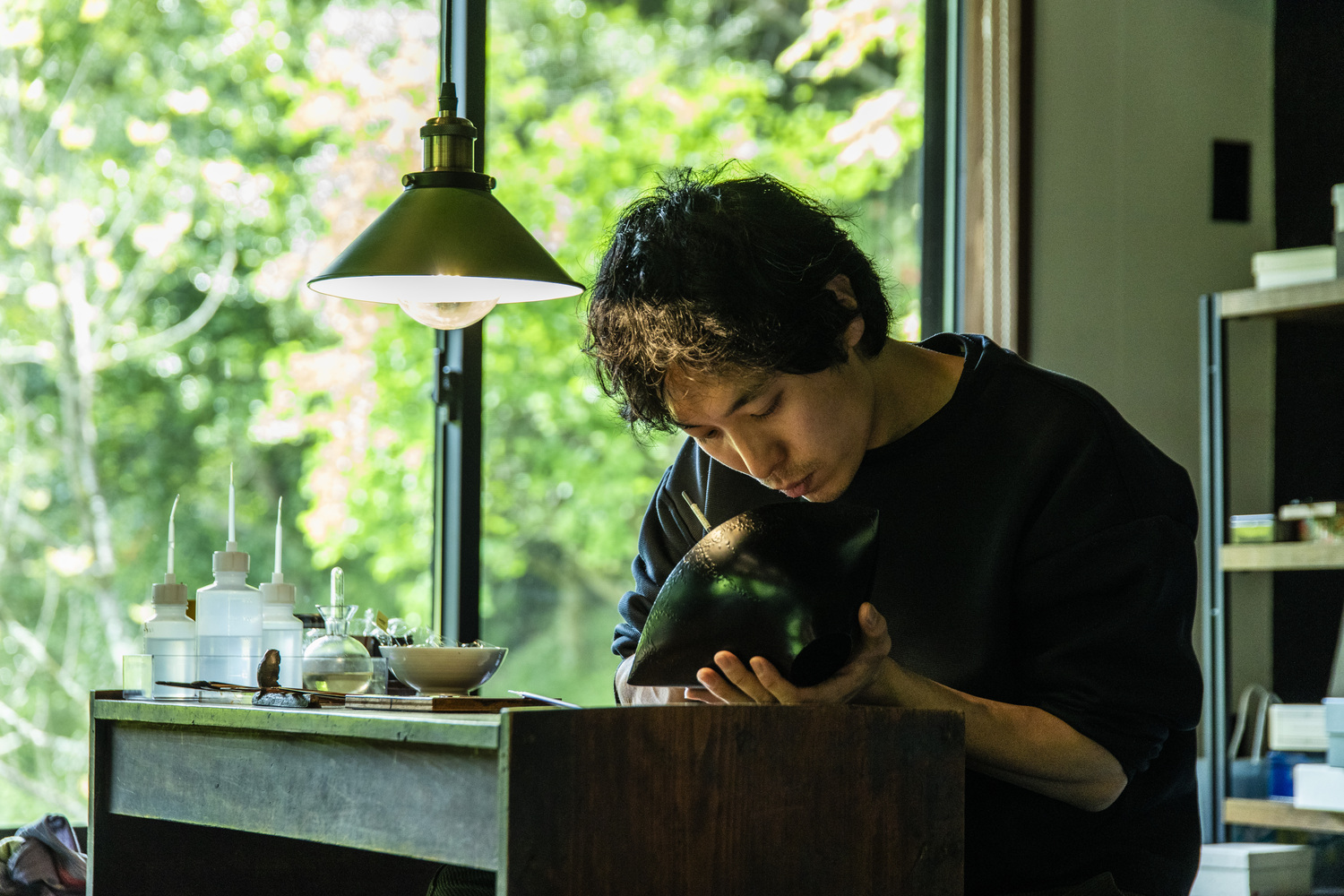
Tasuku Murose is an urushi artist working primarily with maki-e and raden. In June 2026, he presented his first solo exhibition, Crossing Mountains and Clouds, at Lei Gallery Tokyo.
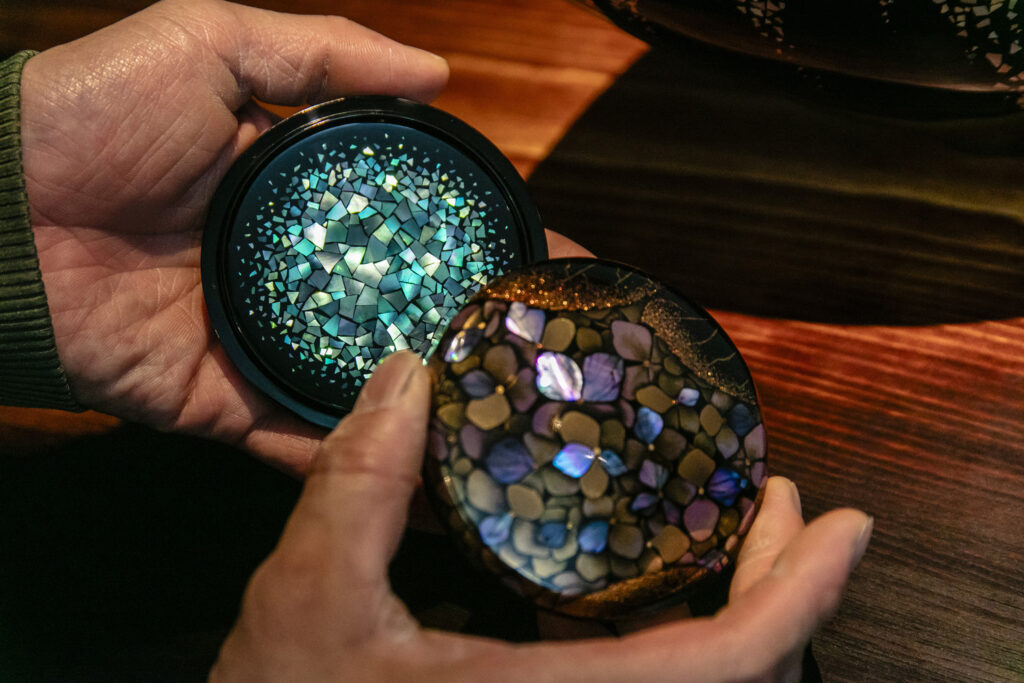
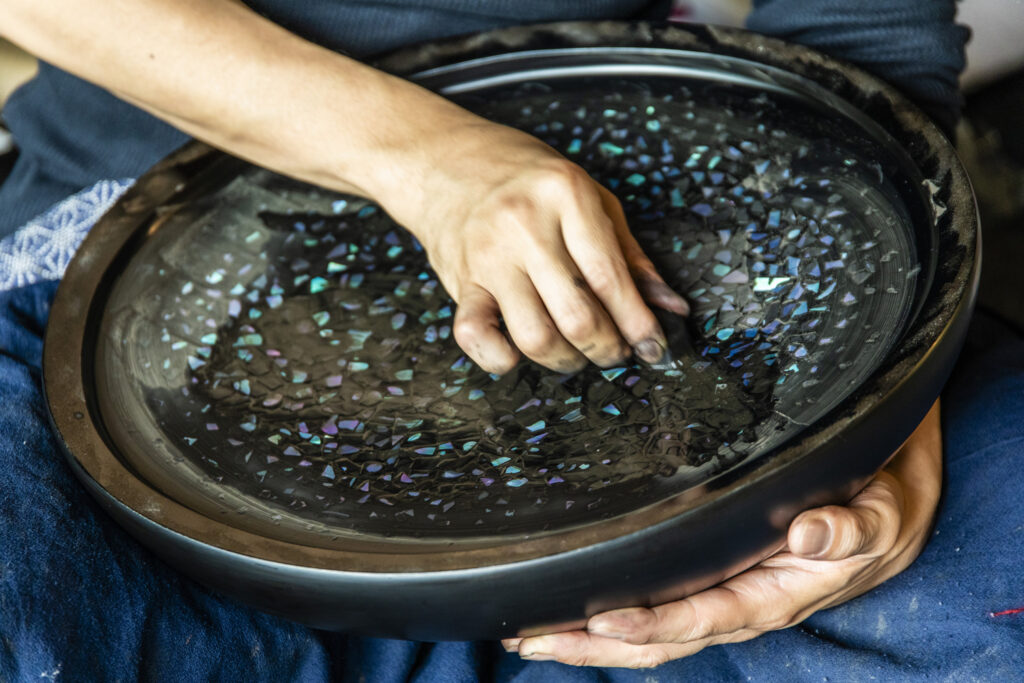
Urushi is a natural lacquer made from the sap of the urushi tree. Maki-e involves applying fine metal powders, often gold or silver, to a lacquered surface, while raden uses pieces of shell to create iridescent detail.
What Emerged from the Exhibition
Sato: Looking back on “Crossing Mountains and Clouds,” what kind of exhibition was it for you?
Murose: I was most anxious before it opened.
The process involved one decision after another. There were many moments when I wondered whether I was heading in the right direction, or whether I would be able to bring everything to completion.
You can spend a very long time on a work, but that does not mean it will reach another person. Until the works were installed in the gallery, I could not be certain whether the direction I had taken was the right one.
But once the exhibition opened, I genuinely enjoyed it.
Watching how people responded to the works, and speaking with them, I gradually began to think, “Perhaps this is what I had wanted to make.”
An exhibition is not only a place to present finished work. For me, it also became a way of seeing the work more clearly through other people—of discovering contours I could not see while I was alone in the studio.
The Decisions Behind the Surface
Sato: You mentioned that there are moments of uncertainty while making. I was surprised to hear how much of the process is spent that way.
Murose: I probably spend more time weighing possibilities than feeling certain. I do not begin with a finished image clearly formed in my mind and then reproduce it with my hands.
There are many possibilities within a work: form, scale, colour, technique. At each stage, I have to imagine where each one might lead and choose a direction.
Thinking carefully does not always produce an answer. Two possibilities may both work, or neither may feel completely right. Choosing one also means closing off another.
Urushi makes this particularly interesting because the surface can look very different during the process from how it appears when finished.
Until shortly before the final polish, the surface may remain clouded or marked. Then a final stage of polishing can change its appearance completely.
So I have to keep working towards something that does not yet exist in front of me. I have to imagine it, and trust that image enough to continue.
The exhibition developed in a similar way. The date was set first, and from there I worked backwards—what to make, at what scale, and how much could realistically be completed.
A deadline does more than make the work move faster. It forces me to take responsibility for decisions that I might otherwise continue postponing.
Sato: As those decisions accumulate, can the work begin to move away from what you first imagined?
Murose: It can. That is part of what I find interesting about making.
Of course, I begin with some idea of what I want to make. But as the work develops, there are moments when arriving exactly at that first image no longer feels like the right outcome.
By then, six months or a year may already be contained within the work. With urushi, that time cannot simply be rewound.
So when something unexpected happens, I do not try to return to the first image. I look at the work as it exists in front of me and consider the next move.
Sometimes a surface or texture appears that I could not have imagined at the beginning. The result may be different from what I first imagined, but sometimes it is more interesting because of that.
Rather than arriving at a destination decided at the start, the destination itself can change through the process of making.
What Urushi Reveals in Person
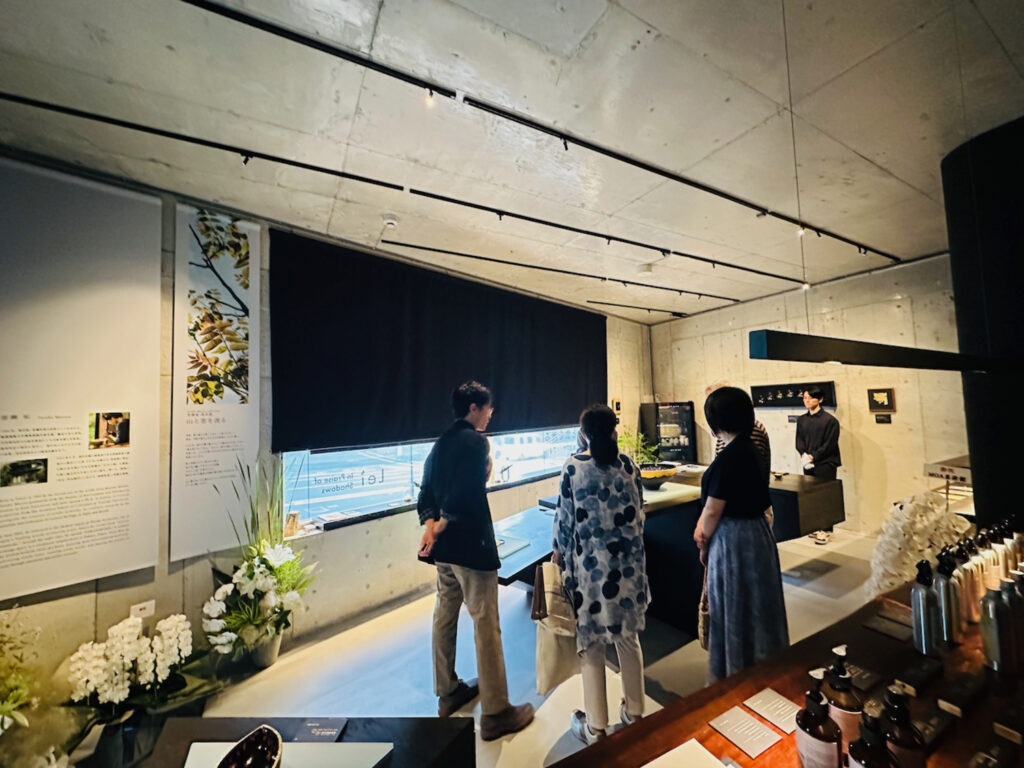
Sato: Many of the visitors had little or no previous familiarity with urushi or maki-e.
Murose: That made me very happy.
They were not necessarily drawn to the exhibition because it was urushi. Some simply saw the work, thought it was beautiful, and decided to come.
For some, it was their first time seeing maki-e. One visitor was moved to tears. The texture and appearance of urushi cannot be understood from a single angle.
Something that appears gold in the light may take on another colour the moment it enters shadow. That change may last only for an instant, and a camera may not fully capture it, but the moment can remain strongly in your memory.
We live at a time when an enormous amount of information is immediately available through a screen.
If this exhibition gave someone a reason to stop and look at something unfamiliar, and then to go and see it with their own eyes, I think that is significant.
You do not have to begin with the idea that something should be valued because it is traditional.
It can begin much more simply: “This is beautiful,” or “This is interesting.” I think that is enough.
Beyond the Exhibition
Sato: Now that the exhibition has ended, what are you thinking about next?
Murose: Several students who saw the exhibition later contacted me and asked if they could visit the studio. That made me very happy.
It is important for a work to reach people. But I also think it matters when that encounter leads someone to become curious, to look further, or to want to become involved.
That is part of how a culture continues.
This exhibition was only a beginning.
Now that more people have encountered the work, I want to think about how urushi can remain connected to contemporary life.
A solo exhibition may carry one artist’s name, but it is never made by one person alone.
There are people who grow urushi trees and people who collect the sap. There are people who prepare the materials and make the tools. There are those who make the exhibition possible, and those who come to see it.
All of these people and processes come together in an exhibition and help sustain the culture around it.
I want to see what we can create next with the people we met through this exhibition—and with those we have yet to meet.
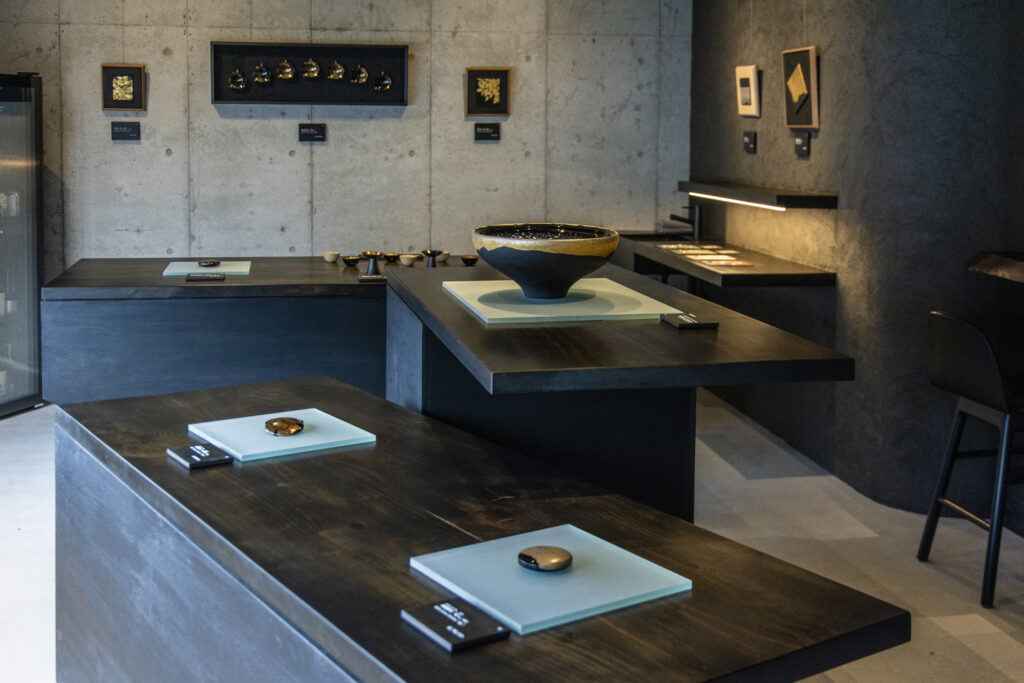
A selection of works first presented in “Crossing Mountains and Clouds” is currently on view at Lei In Praise of Shadows Flagship Store in Yoyogi-Uehara, Tokyo.
The selection may change. Please check the latest store information before visiting.
Plan Your Visit
Lei Gallery Tokyo
Lei In Praise of Shadows Flagship Store
UEHARA TERRACE 1F
1-30-12 Uehara, Shibuya-ku
Tokyo 151-0064
Access
Two minutes on foot from the South Exit of Yoyogi-Uehara Station.
Admission
Free.
Reservation
No reservation is required during regular opening hours.
Opening Hours
Please check here.
Related Stories
ABOUT Lei
Lei creates time and space to return the senses to 0.
We quietly share the people we meet and the air of each day on Instagram.