
 Nobuaki Sato

Lei Joulnal.
What remains unspoken.
What lingers just beyond brightness.
Through the lens of In Praise of Shadows, Lei Journal traces the people, spaces, and practices that take shape not only through what is shown, but through what is held back.
An Interview with the New York–born Jewelry Artist
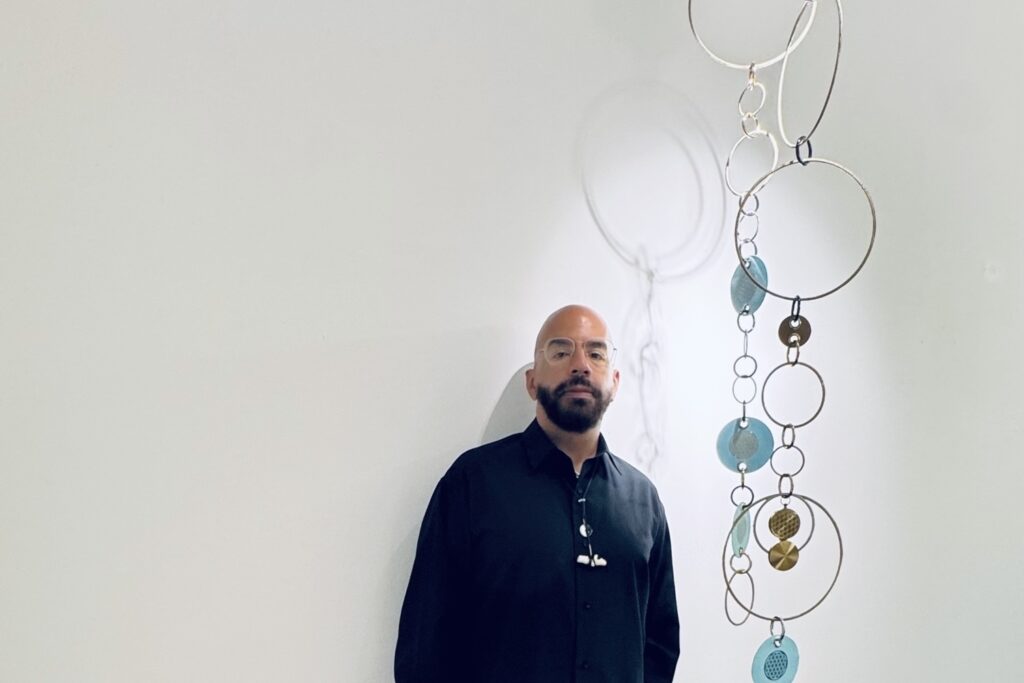
Simon Alcantara is a New York–born artist whose practice spans jewelry, handwoven structures, photography, and film. Trained as a professional classical dancer, he later developed his jewelry practice independently, with hand weaving becoming a defining technique throughout his work. He has designed for fashion houses including Oscar de la Renta, Balmain Haute Couture, J. Mendel, and Mary McFadden. He was a member of the CFDA from 2004 to 2019.
In Japan, Alcantara is represented exclusively by Hono Uehara, owner of THE SALON BY NORH, whose relationship with Alcantara has shaped how his work is introduced and presented in Japan.
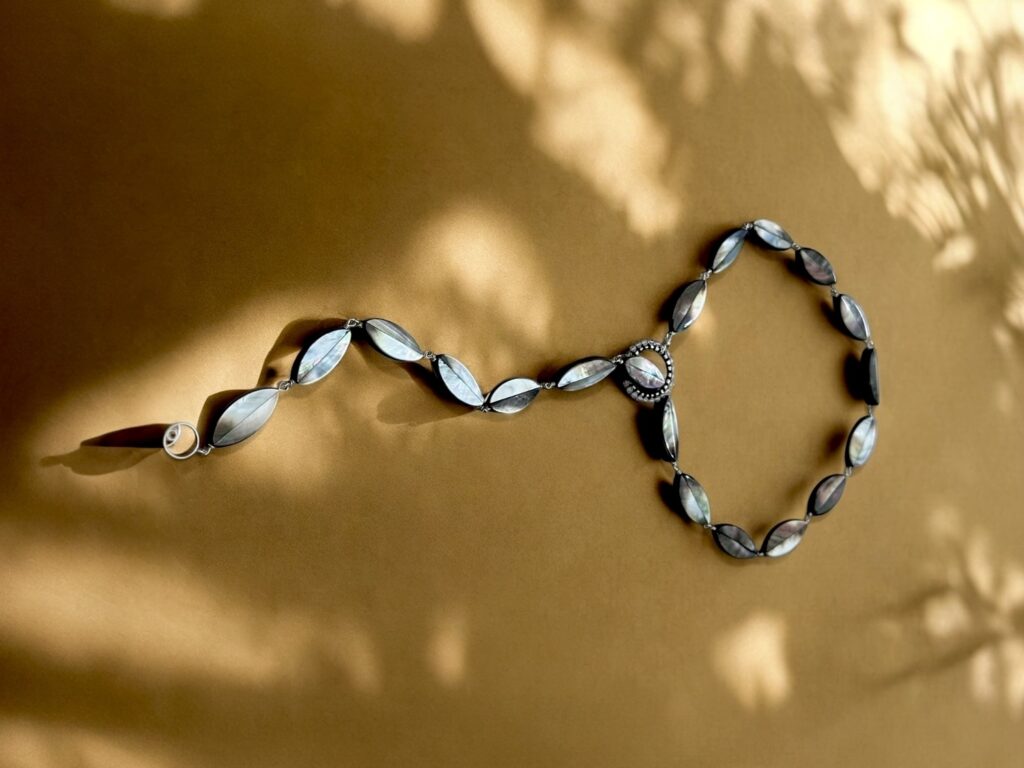
Simon Alcantara works across jewelry, photography, film, and installation. He does not see them as separate disciplines. To him, they belong to the same world—one he is still discovering as he works.
Lei Journal spoke with Alcantara about what has stayed with him, what changed, and the way he works today.
Different Forms of the Same World
Sato: Your work now spans jewelry, photography, film, and installation.
How do you describe what you do today?
Alcantara: I think what I do is create worlds. Jewelry was the first form through which people came to know my work, but photography has been part of my life since I was very young.
Film and installation are part of that world as well.
To me, they are all the same thing—different expressions of it. I do not have a master plan for where it all leads. I am discovering it as I continue to create.
From Dance to Other Forms of Expression
Sato: When you look back, how did you arrive at the way you work today?
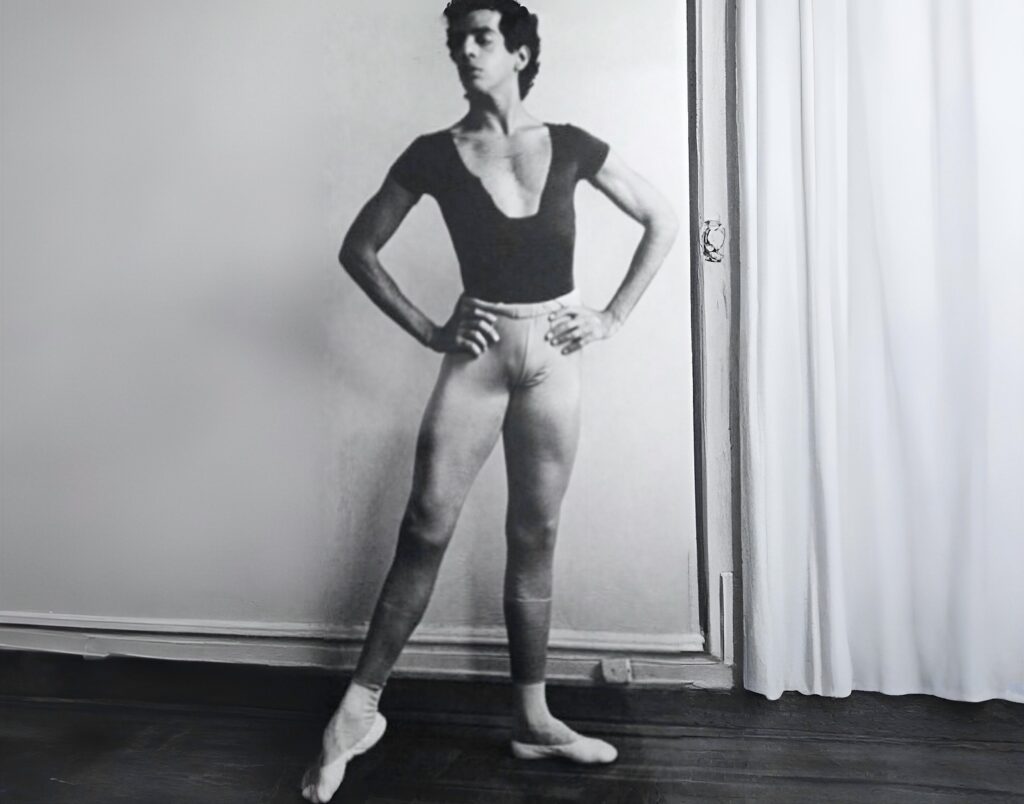
Alcantara: I was a classical dancer first.
When I was about thirteen or fourteen, I was studying ballet in New York on scholarship.
A friend there made earrings, and I became fascinated by what she was doing. I asked her to show me how, and then I became obsessed.
After class, I would go to vintage stores, buy old necklaces, crystal and jet, take them apart, and make my own pieces. Ballerinas from American Ballet Theatre and New York City Ballet would take class at the school, and I sold pieces to them. Even then, I kept a little notebook with the cost of the materials and the time it took me to make each piece.
Because I was dancing, I was also thinking about how jewelry would work on the body and how it would read from a distance. At the Metropolitan Opera House, for example, the audience is far away, so I thought about how a piece might catch the light enough to be seen.
Sato: When did jewelry begin to become more than an interest?
Alcantara: I went on to dance professionally, but a few years into my career, I had a serious accident. I spent about six months on crutches and then another year rebuilding my strength.
I still wanted to dance. I auditioned for San Francisco Ballet, and the director told me it would probably take another year to get back to where I had been. At that age, it felt like the end of the world. I continued for a little while, but eventually, at around twenty-six, I stopped dancing.
During that period, I had started making things again. A friend wore one of my necklaces to a party in New York, where stylist and costume designer Patricia Field saw it and asked who had made it. She asked me to make a collection for her store. I had no idea what I was doing. It sold out in three days.
From there, the work began to grow. Untitled reached out to me, and about two years later I began working with Oscar de la Renta. I had never decided that jewelry would become my career.
It simply became my work.
It came into my life at a moment when I was losing the thing I had spent years training to do.
Sato: What stayed with you from ballet?
Alcantara: Discipline, first of all. In classical ballet, you show up every day and repeat the same movements, refining them again and again. There are pieces I created twenty years ago that I still make today, and they are better now because I keep looking for a better way to make them.
One of my teachers, Gelsey Kirkland, would say, “Don’t dance on the beat. Dance between the notes.” If you move exactly where people expect you to, they already know what is coming next. Moving between the notes creates something unexpected, but it still has to remain harmonious.
That is deeply ingrained in me. It is there in the way I make jewelry, approach an installation, or take a photograph. It is simply the way I see.
The Work in Motion
Sato: As you began developing your jewelry practice, how did you figure out how to construct the pieces?
Alcantara: It wasn’t intentional. It started out of necessity. I had never studied jewelry formally, so I didn’t know the conventional way of putting things together. I had to find my own way, and I started weaving. As I repeated the process, it became almost meditative.
At the same time, I didn’t want the work to simply look handmade or crafty. I wanted to refine the technique until it wasn’t immediately obvious how it had been made.
Sato: Was there a particular piece that changed the way you understood the technique?
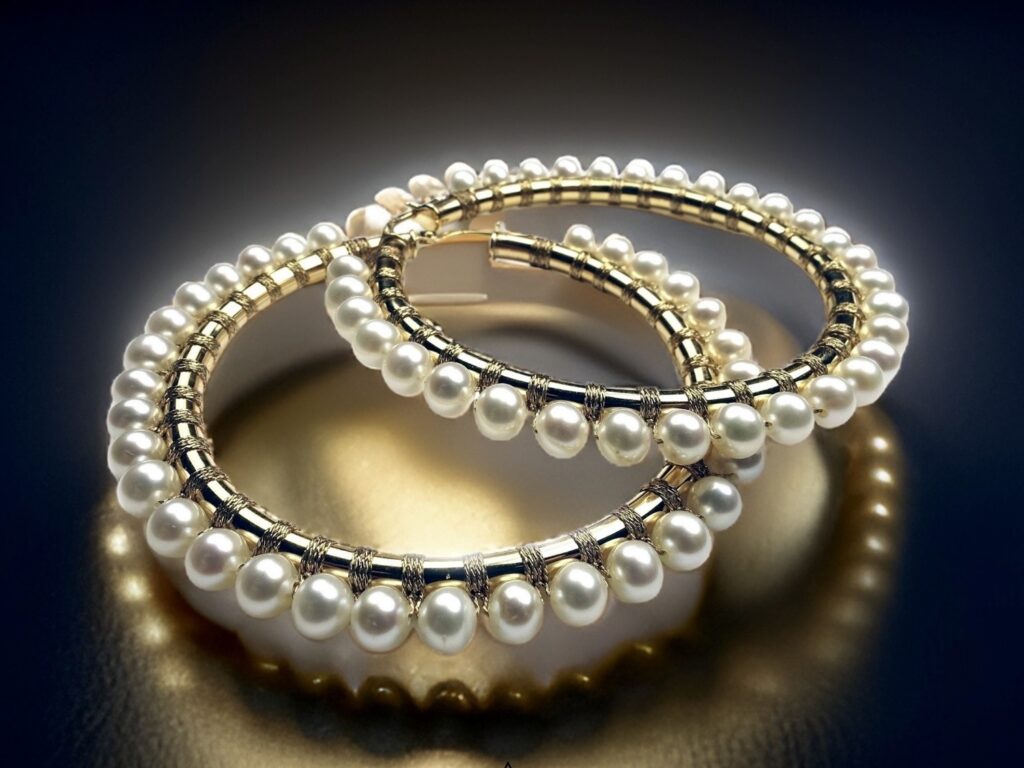
Alcantara: There was a hoop woven with pearls that I kept seeing in my mind. I wondered if I could weave the pearls onto the hoop in the same way I was already weaving other materials.
The first one wasn’t perfect. But when I finished it, my whole body became hot. I couldn’t really explain it. I just knew there was something there. Years later, I was visiting a museum in Cairo and saw an ancient hoop with pearls woven around it in wire. My ears became hot, and I felt that same physical sensation again, only much stronger. It made me feel that I had connected with something older than what I consciously knew.
Sato: What do you feel when you see someone wearing one of your pieces?
Alcantara: That is often when I fully understand what I have made. I watch how they move, where the light falls, and how the jewelry changes on the body. It is similar to the way I used to look at movement in dance. The same piece can look completely different from one person to another. Sometimes someone wears it in a way I never imagined.
I tell them, “You will find your own way. This is yours now.”
Once a piece belongs to someone, it should not be about me anymore. It should be about that person.
Sato: Has that changed the way you think about what jewelry can do?
Alcantara: Yes. Early in my career, I was doing a trunk show at Saks Fifth Avenue and questioning what I was doing. I wondered if jewelry was important enough—if I should be doing something more meaningful.
Then, that same day, several customers told me almost the same thing: “When I wear your jewelry, I feel so powerful.” That stopped me.
I realized something was happening that I didn’t fully understand, and I needed to stop questioning it and go deeper.
When I talk about power, I don’t mean arrogance.
I mean feeling good about who you are. When you feel that way, you move through the world differently. That is where “I want to remind you of your power” comes from.
In the Process
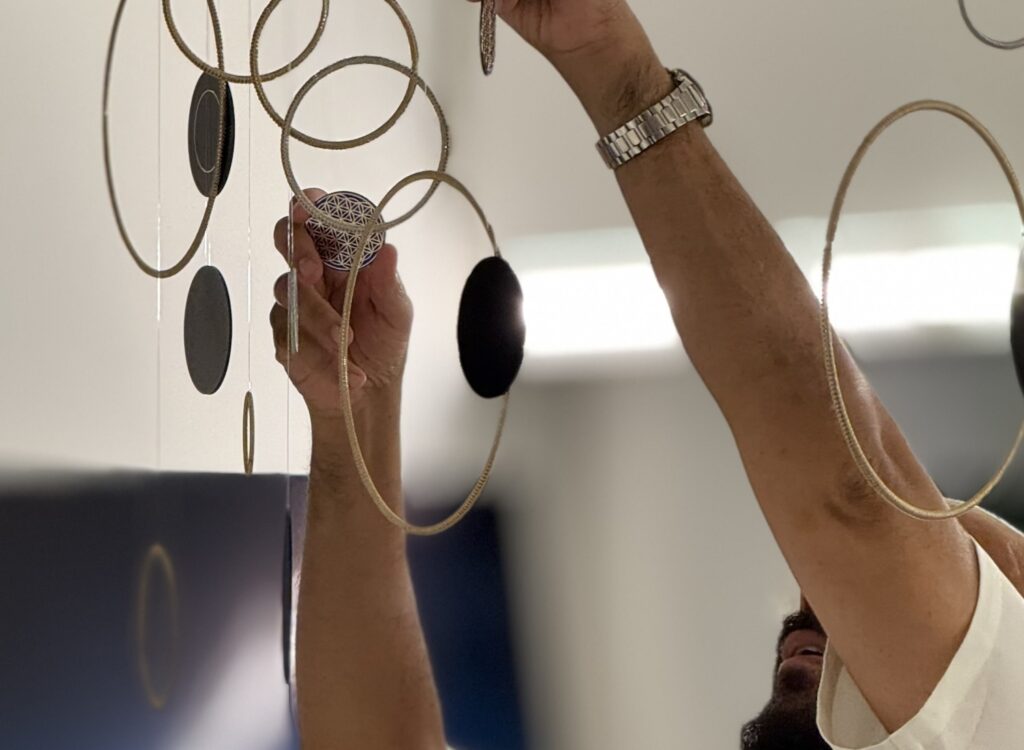
Sato: When you’re creating, what tends to go through your mind?
Alcantara: It is almost like a trance. When I am creating something new, sometimes I have to photograph the process because afterward I cannot remember exactly how I did it.
And when I am making the same piece repeatedly, if I start thinking too much, I make mistakes.
So I need a certain kind of distraction. I might put on music, a podcast, or an audiobook—something I choose—so that my hands can work naturally instead of my mind trying to control every step.
Sato: Do you prefer to work alone?
Alcantara: Yes. The process is very private for me. Even when I had a studio in New York, I would often go in very early so I could work by myself.
I can choose a distraction like music, but an interruption from another person can be very jarring. It takes me out of that state.
There are people who have known me for years who have never seen me work. That part of the work is very personal, almost sacred.
Sato: What are you most interested in exploring right now?
Alcantara: My imagination. About a year and a half ago, I realized how much time I was spending on my phone and social media, and I noticed that it was making me anxious.
So I started reading again, especially in the morning and before I go to bed.
I began to notice my imagination opening up again. My nervous system became calmer, and I could create in a more peaceful and enjoyable way. Now I think a lot about what I choose to put into my mind. With algorithms, we can sometimes think we are being creative or discovering something for ourselves, when in reality many of us are being shown the same things.
I do not want everything I see to be chosen for me. Reading allows me to choose what enters my imagination.
How the Day Begins
Sato: How do you usually begin your day?
Alcantara: The first thing I do when I wake up is say thank you. Thank you for another day.
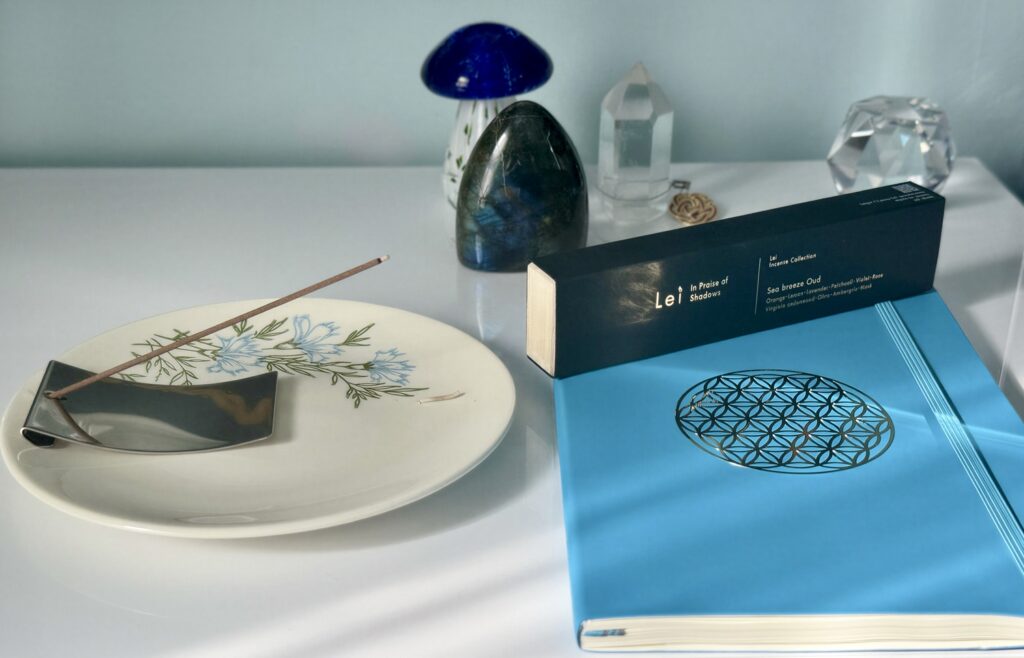
Then I burn Palo Santo. That is very much part of my culture. If the weather allows, I open the windows and let fresh air in. After that, I usually light incense. Incense has always been part of my mornings.
Sato: What kind of incense do you usually burn?
Alcantara: Different kinds. I love more familiar scents like sandalwood—something that immediately carries certain associations for me.
Recently, I discovered the Lei Incense Collection when I visited the store. Sea breeze Oud felt different from the incense I was used to.
It felt modern, but not in a synthetic way.
It felt like a different point of view.
There is a freshness to it.
For me, it feels more joyful than sacred. I like the atmosphere it creates.
Sato: One last question. When someone encounters your work for the first time, what do you hope they feel?
Alcantara: I hope they feel an emotional connection to it. They do not have to understand it intellectually. I would rather they feel something.
I hope they are surprised.
I hope they are delighted.
And I hope they are curious.
Further Information
Simon Alcantara on Instagram
Simon Alcantara on Website
Japan — THE SALON BY NORH
Simon Alcantara’s 2019 statement on leaving the CFDA
Related Stories
Visit Lei
In Tokyo, Lei In Praise of Shadows can be experienced in space — through scent, light, material, and the quiet atmosphere of the store itself. The collection can also be explored online.
Lei In Praise of Shadows Flagship Store
UEHARA TERRACE 1F, 1-30-12 UEHARA, Shibuya-ku, Tokyo, Japan
Website
Instagram