
 Nobuaki Sato

What remains unspoken.
What lingers just beyond brightness.
Through the lens of In Praise of Shadows, Lei Journal traces the people, spaces, and practices that take shape not only through what is shown, but through what is held back.
An Interview with Isabella Goldmann

Isabella Goldmann
Isabella Goldmann is a Milan-based designer and bio-architect, and the CEO of Goldmann & Partners. Through Raremood, a platform that extends architectural thinking into the objects and rhythms of everyday life, she approaches architecture and living as part of the same continuum.
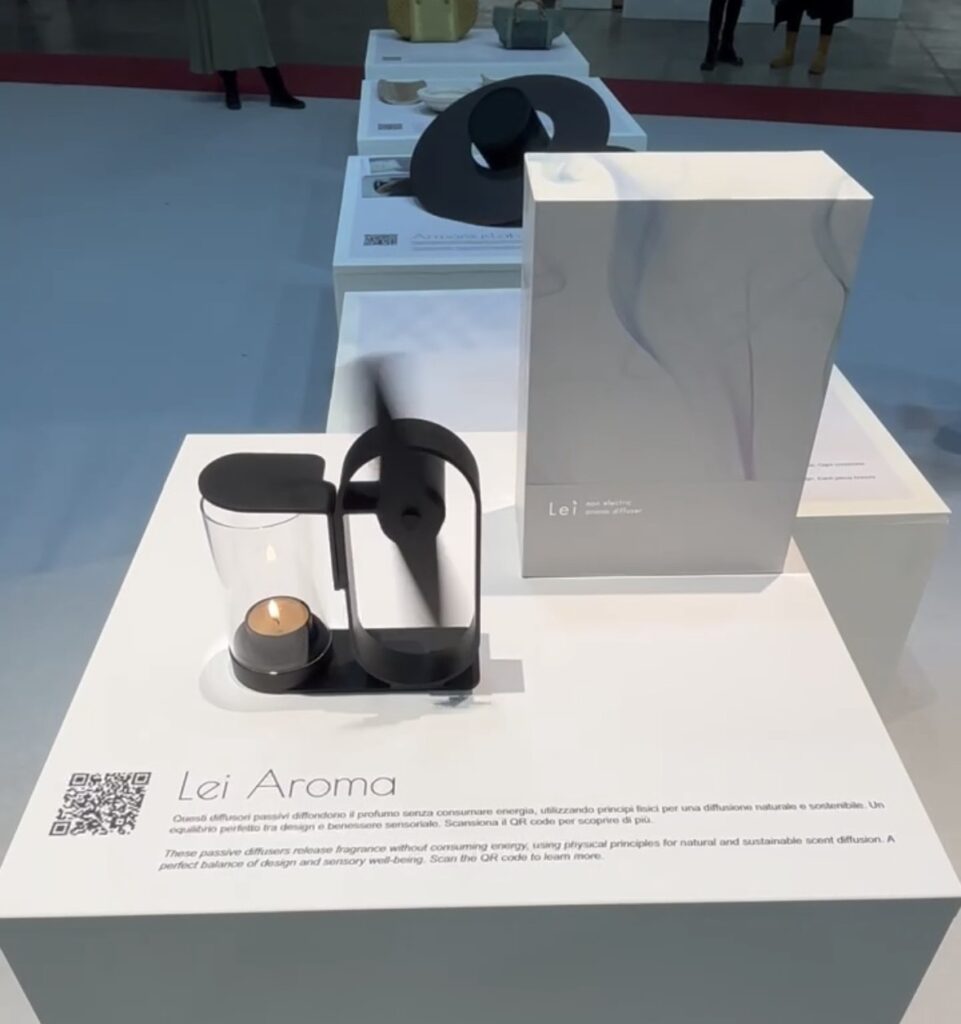
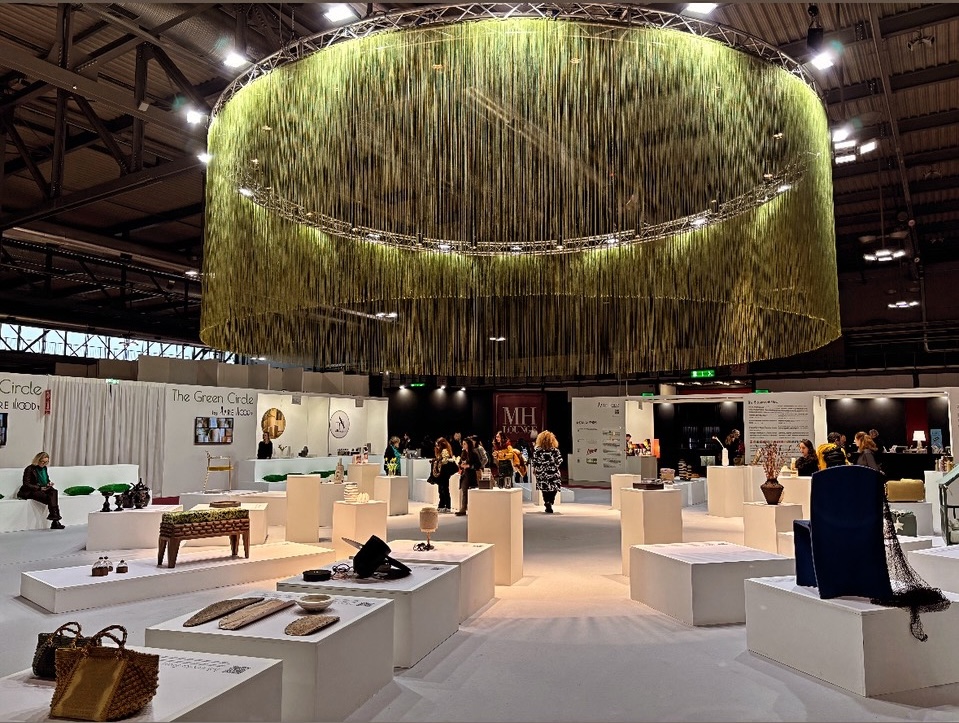
Lei first came to Isabella Goldmann’s attention at Maison et Objet, the Paris design fair, in 2022. What began there continued quietly: Goldmann was drawn to Lei’s sensibility, a recognition that later led to an invitation to exhibit at Milano Home within the dedicated booth presented by Raremood.
Based in Milan, Goldmann approaches architecture and daily life as parts of the same continuum. In this conversation, she reflects on what old buildings still teach us, why design begins with people and place, and what, from the beginning, felt quietly familiar in Lei.
Where Architecture Meets Daily Life
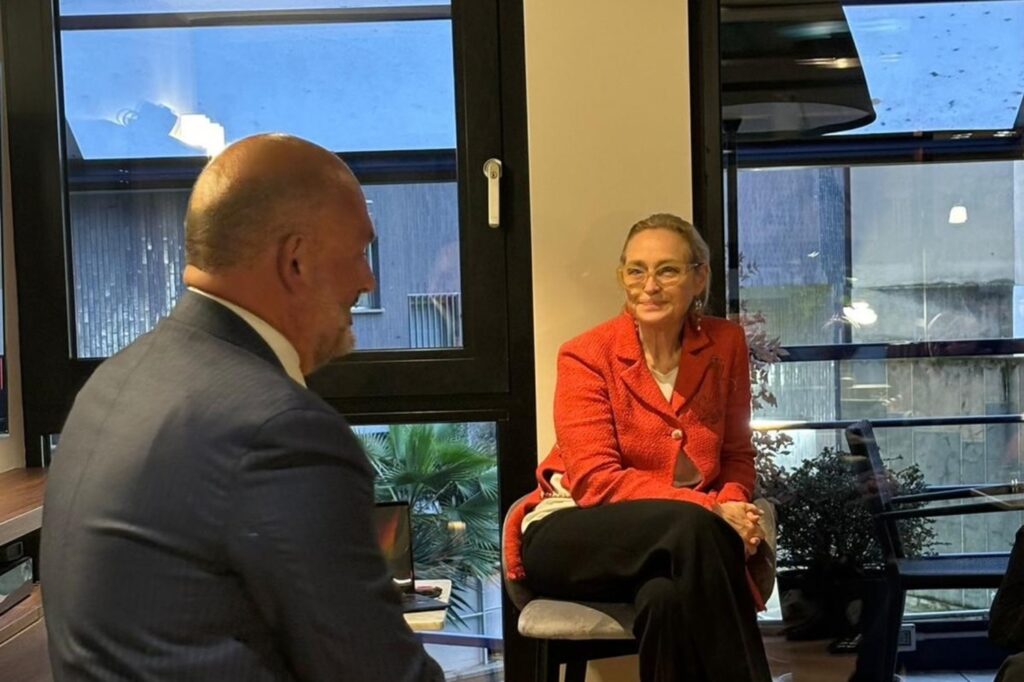
Sato: To begin, could you tell us about your work today? How do Goldmann & Partners and Raremood relate to one another?
Isabella Goldmann: A building may be finished, but if the objects within it — and the life unfolding inside it — move in another direction, the space still feels unresolved. I have felt that for a long time. We begin by reading the conditions of a place: the direction of the sun, the movement of air, the nature of the land, the character of materials. Before relying on heavy systems or technology, we ask how architecture itself can make life more comfortable. Our work is to create spaces that endure, and that feel natural to the people living within them.
But for me, architecture does not end there. Architecture alone cannot fully shape a person’s sense of time. That is why I came to believe that we also need to think about what is used within a space, and how life takes shape inside it.
Sato: And that is where Raremood begins for you.
Isabella Goldmann: Yes. Raremood did not begin as something separate from architecture. It grew out of a simple question we kept hearing in residential projects: what belongs in a space once it has been made with care?
I came to see it as a platform that supports architectural thinking from the side of daily life, through a careful selection of objects. It was never about adding decoration afterward. It was about understanding what could live naturally within a space.
Sato: So for you, architecture and daily life are not really separate.
Isabella Goldmann: No, they are not. Before asking what something should look like, I ask who it is for, and where it belongs. That attitude does not change between architecture and object. To me, space and daily life belong to the same continuum.
What Endures
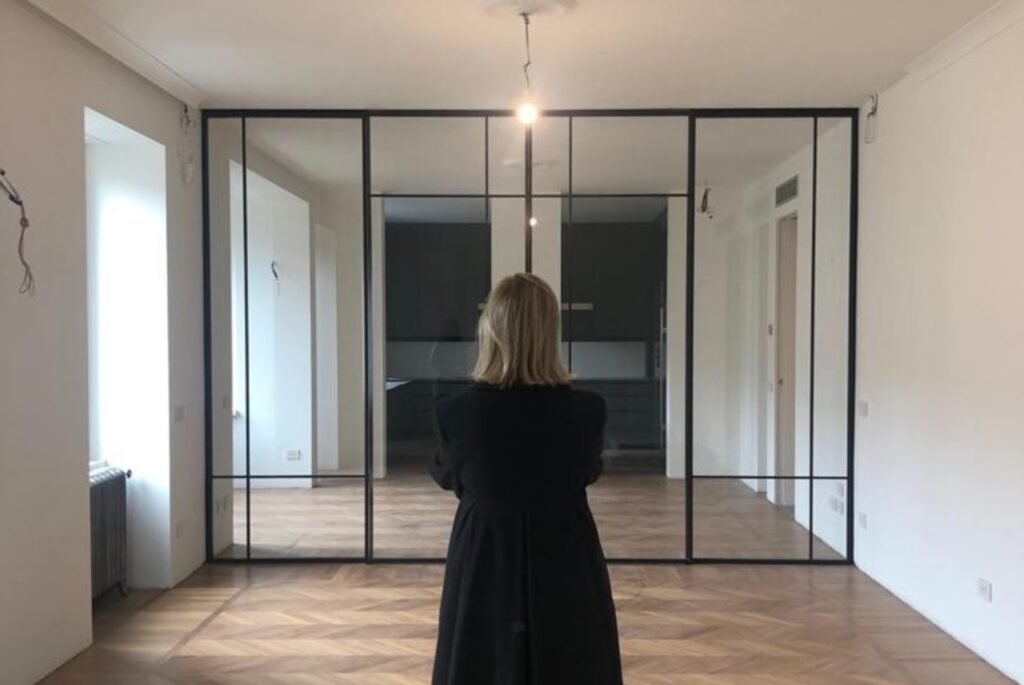
Sato: Where did that way of thinking begin to take shape?
Isabella Goldmann: I was deeply shaped by two professors I met during university. One taught the restoration of old buildings. Through him, I found myself studying the work of Michelangelo, Raphael, and Bramante.
What struck me was that these buildings were never only about beauty. You could see that they worked with local materials, read the direction of the sun, understood how light entered a space, and asked how a building might last. There was a kind of intelligence in the design itself, something distinct from ornament.
Sato: So you were not only studying old architecture — you were learning how it thought.
Isabella Goldmann: Exactly. What stayed with me most was church architecture. Churches were not built on the assumption that everything visible had to be expensive. In many cases, resources were concentrated on the interior — marble, plaster, sculpture, decoration — because that was where the building had to speak to people. But the structure itself was guided by another question: how can this endure? How can it last for generations? That question was built into the architecture.
Sato: So it was never only about grandeur.
Isabella Goldmann: No. I spent a long time asking that question with my professor: how can a building last for centuries without depending on excess? Many of the principles we speak about today were already there — using local materials, positioning a building in relation to the sun, and working with the environment before relying on mechanical cooling and heating. I learned that intelligence from sixteenth-century architecture.
Sato: And once you saw that, everything changed.
Isabella Goldmann: Completely. Those buildings taught me that architecture once had its own sequence: first read the conditions, then respond to them, and only then allow form to emerge.
There was another professor, though, who taught contemporary architecture. When I encountered contemporary buildings while carrying that earlier perspective, the gap felt immense. It seemed to me that a basic kind of intelligence — once taken for granted — had been forgotten.
Sato: In what sense?
Isabella Goldmann: In very basic ways. Where does the sun enter? Which direction does the building face? How does the wind move? These should be starting points. Yet there are moments when architecture seems to treat them as secondary. If you make a building entirely of glass and orient it to the south, it becomes, in summer, almost like a microwave. And then the response is simply: we will solve it with air conditioning. That is where I felt a deep discomfort.
Sato: So that intelligence moved out of the building itself.
Isabella Goldmann: Yes. I do not mean to reject technology. But something changed when care that once belonged to architecture itself was replaced by functions added afterward. Perhaps architects gained more freedom in the process. But within that freedom, it became harder to see why a building had to take a certain form, or what conditions had given rise to it.
Sato: And that still forms the basis of how you work today.
Isabella Goldmann: Very much so. Because we have more tools now, I think we need to think even more carefully about what should come before them: land, light, wind, material, and the time and sensibility of the people who will live there. A building becomes truly of its place only when those conditions are taken in first. For me, design is less about adding something than about recovering that order.
Design Begins with People and Place
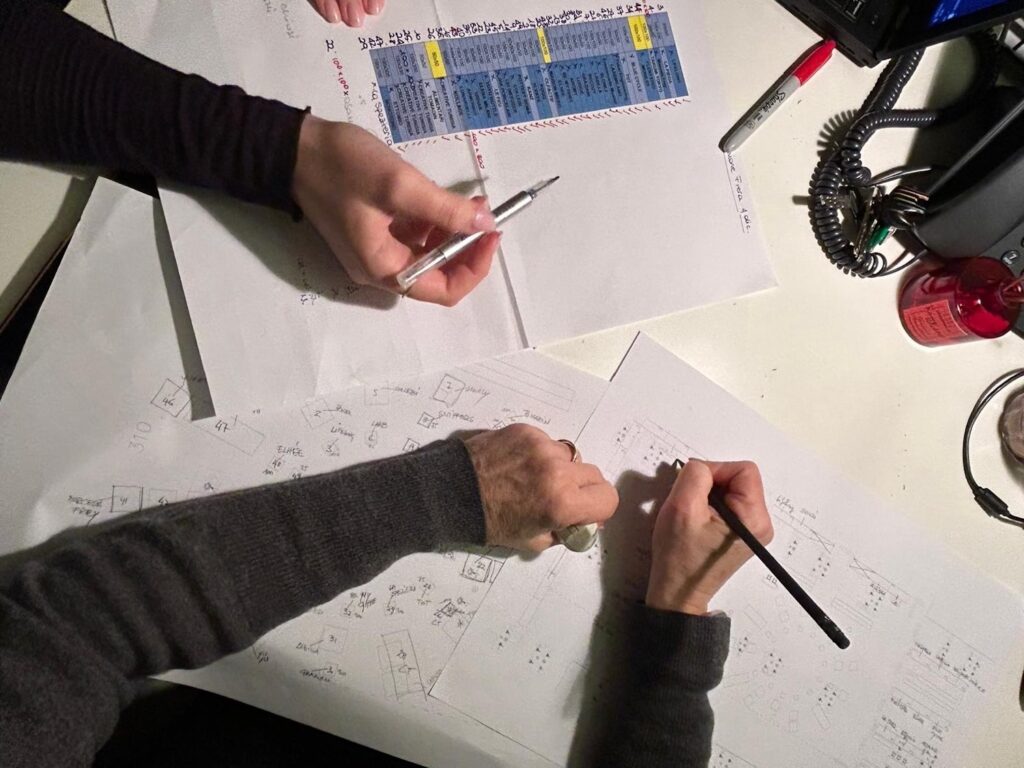
Sato: Where does design begin for you?
Isabella Goldmann: The first questions are always: who is this for, where is it, and only then, how should it take form? We do not begin with an idea. We begin with knowing a person, and knowing a place.
Sato: So “who it is for” goes deeper than taste.
Isabella Goldmann: Yes. I want to understand what kind of life a person has lived, what they have seen, what has moved them, and what memories they carry. I try to understand all of that, not taste alone.
Sato: Not taste on the surface, but the person underneath.
Isabella Goldmann: Exactly. To me, space is a stage for the person living within it. I would not want that space to feel distant from their own outline. And that does not stop with one person. If there is a family, the number of perspectives multiplies. Who lives there? What is the relationship between them? How does time move through that home? Design is not only about making something inhabitable. It is about asking what kind of vessel is right for the life unfolding there.
Sato: And then comes the place.
Isabella Goldmann: Yes. If the project is in Tokyo, I look at the light in Tokyo. How does the angle of the sun change between summer and winter? Is the light blue, or warm? Which direction does the wind come from? What are the temperature and humidity like? Even for the same person, the answer changes when the place changes. That is why I cannot decide on form without first reading the land.
Sato: You look very closely.
Isabella Goldmann: Very closely. How much sun enters? How does summer light differ from winter light? Which windows receive the wind? Those conditions change not only the exterior appearance of a building, but the way it feels from within. That is why, at the beginning, it hardly feels like design at all. It feels more like receiving conditions.
Sato: And only then does form begin to appear.
Isabella Goldmann: Yes. Only after understanding the person and the place do I begin to think about form, material, heat, walls, what should be shown, and what should be held back. I do not begin with a strong form and then force conditions to accommodate it. The outline comes later, gradually. That order matters to me. Of course there are many judgments in the end. But before that, there must be time — time to think, to observe, to let something emerge naturally through contact with people and place. Only afterward does the project begin to show what it is.
Why Lei Felt Familiar
Sato: What draws you to Japanese design and making?
Isabella Goldmann: What draws me first is its movement toward essentials. It is not about adding more, but about quietly discerning what is necessary. It can be very simple, but that simplicity is never empty. You feel that a way of thinking is present within it.
Sato: So it is not just minimalism.
Isabella Goldmann: No. What matters to me is not reduction in itself, but whether there is a clear reason for the way something is. In European architecture, there is the well-known triad of venustas, firmitas, and utilitas — beauty, durability, usefulness. They are essential principles. But what draws me to Japanese design is a different order: not impact first, but rightness first. And yet beauty and strength are still there.
There is a kind of beauty in Japanese objects that does not seem designed to attract attention. They do not insist. But as you come closer, there is density there. They are quiet, but never vague. Their beauty does not appear only at the moment of completion. It emerges through use, and through what remains. That sensibility appears not only in what is shown, but also in what is deliberately left unsaid.
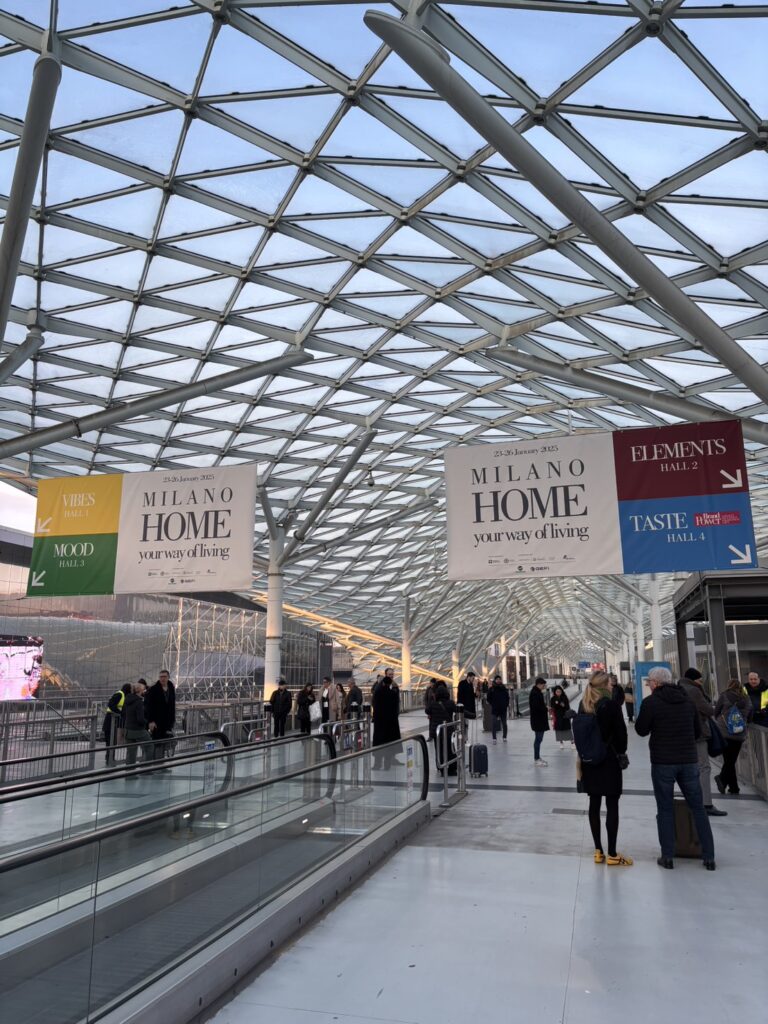
Sato: Lei first came to your attention at Maison et Objet, the Paris design fair, in 2022. Later, the brand was invited to exhibit at Milano Home within Raremood’s dedicated booth. What was it that first stayed with you?
Isabella Goldmann: What first struck me was the way the objects carried themselves. There was a quietness to Lei’s collection — not because it was trying to appear minimal, but because it did not depend on excess. We live in a time that tends to keep adding. Lei felt different. It carried a more subtractive way of being, and I found that very striking.
What matters to me is not simply whether something is well-made or beautiful. I look for whether there is an idea within it. And by that, I do not mean a concept imposed for effect, but a way of thinking that can still be felt in the object itself. With Lei, I could sense that — in the restraint of the objects, in the atmosphere of the space, and in the fact that nothing felt overstated.
Sato: And the invitation followed naturally.
Isabella Goldmann: Yes. Lei felt immediately at ease in that context. There was a clarity to its sensibility that made the connection feel natural.
Sato: And later, we spoke about In Praise of Shadows.
Isabella Goldmann: Yes. When I heard those words, they felt immediately familiar. Not because I was hearing something new for the first time, but because I had already sensed that atmosphere in the products and in the space, and only later learned its name.
It is a way of seeing beauty not only in light, but in what remains just before it — in shadow, in restraint, in things not fully said. What mattered to me was never simply that Lei was a Japanese brand. It was the placement of its sensibility. It knew how to remain quiet without becoming vague. That, to me, is what made Lei feel distinct.
Sato: So what stayed with you was not only the object, but the discipline behind it.
Isabella Goldmann: Exactly. There was restraint, but also intention. Quietness, but not softness. A clear idea, held without forcing itself forward. That is why the encounter felt natural.
Visit Lei
In Tokyo, Lei In Praise of Shadows can be experienced in space — through scent, light, material, and the quiet atmosphere of the store itself. The collection can also be explored online.
Lei In Praise of Shadows Flagship Store
UEHARA TERRACE 1F, 1-30-12 UEHARA, Shibuya-ku, Tokyo, Japan
Lei on Website
Lei on Instagram
Further Information
Isabella Goldmann on Instagram
Goldmann & Partners on Website
Raremood on Website
ABOUT Lei
Lei creates time and space to return the senses to 0.
We quietly share the people we meet and the air of each day on Instagram.