
 Nobuaki Sato


Urushi is often translated as Japanese lacquer.
The word is accurate, but incomplete.
Made from the sap of the urushi tree, urushi is a material shaped by time.
A lacquer tree must be cultivated for many years before its sap can be collected. The bark is carefully cut, little by little, allowing the sap to rise to the surface. From a single mature tree, only a small amount of urushi can be taken.
The process is slow, precise, and irreversible.
After the sap has been drawn, the tree is eventually cut down. In this sense, urushi is not simply harvested. It is received from a living material that cannot reproduce. This quiet depth begins before the object is made.
In Japan, urushi has long lived between daily use and ceremony. It appears in bowls, trays, tea utensils, writing boxes, ritual objects, interiors, and works of art.
Its beauty is not immediate.
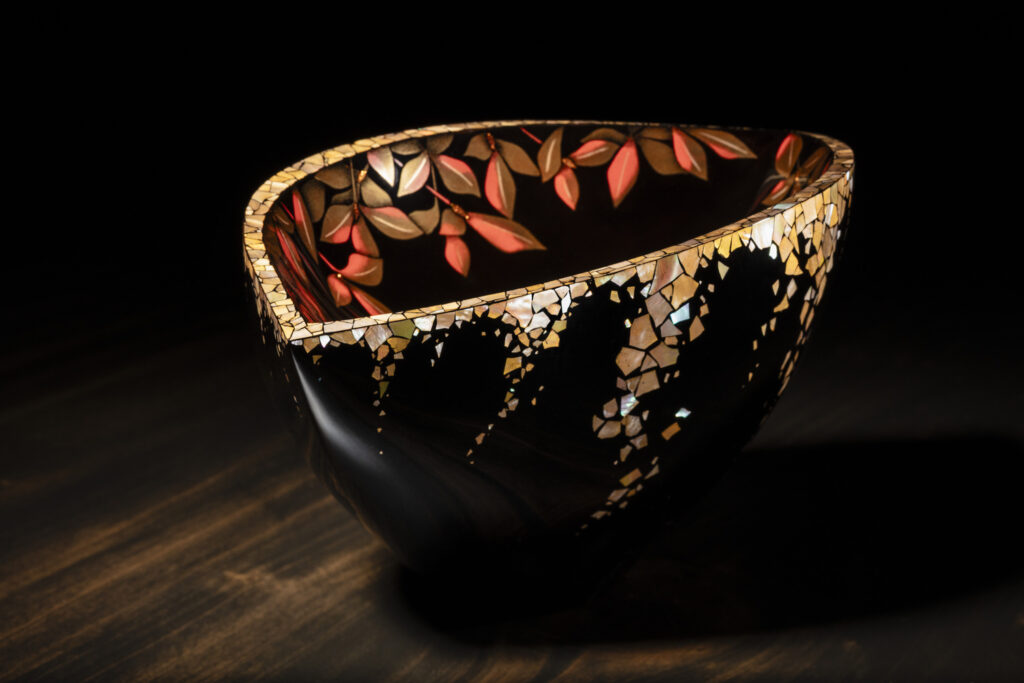
A black surface may seem still at first. Then, as the light shifts, depth begins to appear. A reflection does not simply rest on the surface. It seems to rise from within it.
A Surface That Holds Time
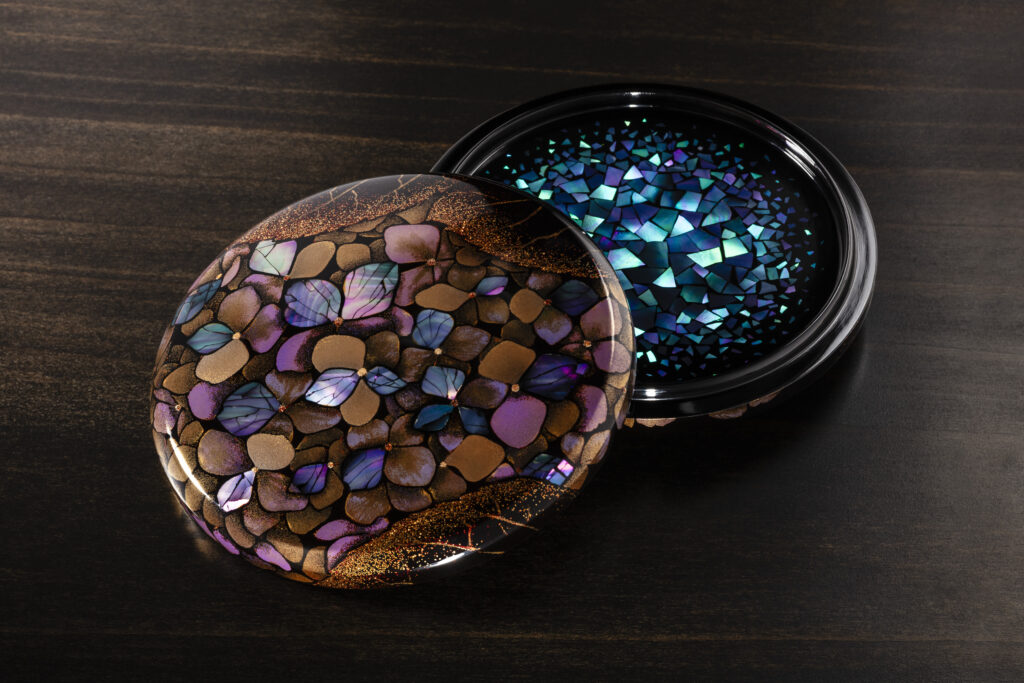
Urushi does not cover an object in the way a modern finish might. It becomes part of the object.
Layer by layer, it protects, strengthens, and transforms the surface beneath. Once hardened, urushi gives an object a surface made to endure touch, use, and time.
This is why urushi has never belonged only to decoration.
It has been used for things touched by the hand, placed in a room, used in ceremony, or kept across generations. Its value lies not only in how it looks, but in the time and care it allows an object to carry.
Maki-e, Light Within the Surface
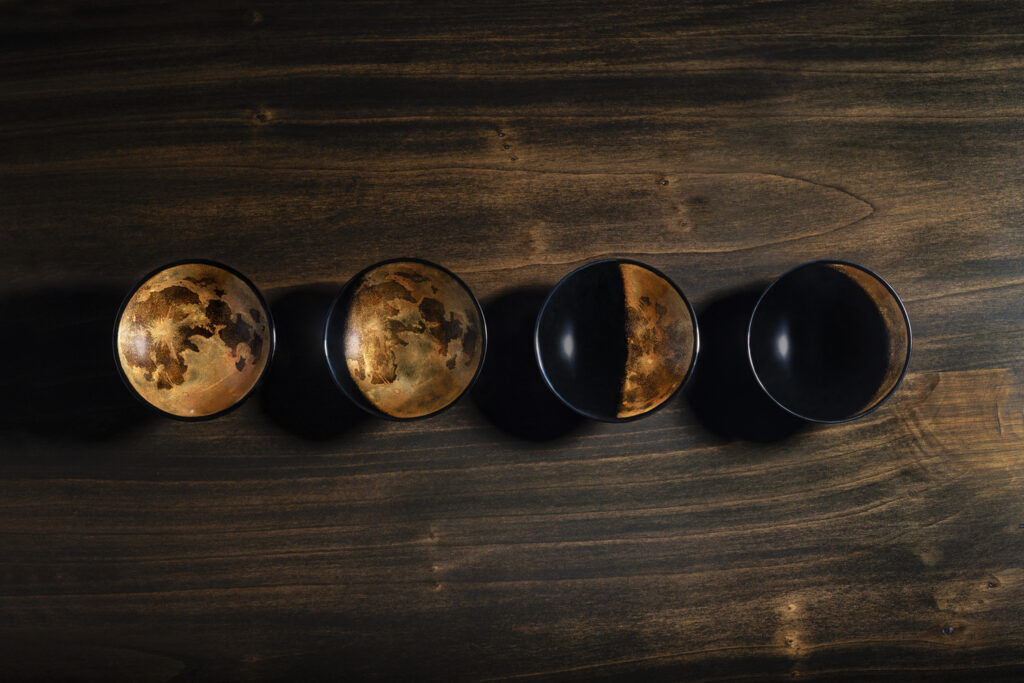
Maki-e is one of Japan’s most refined lacquer techniques.
A design is drawn with wet urushi, and fine powders of gold, silver, or other metals are placed onto the surface before the lacquer hardens. Through layering and polishing, the image gradually appears.
Maki-e is not simply a way to make something shine.
Its light is more restrained.
Gold may appear only at a certain angle. A line may catch the light for a moment, then disappear again into the surface. The image changes as the viewer moves.
For centuries, maki-e furnishings were closely associated with the imperial court, aristocratic households, temples, and shrines. Some were made to hold writing tools. Others were made to contain sacred texts, ritual objects, or things meant to be protected across generations.
In such objects, the box was never just a container.
Even before it was opened, its surface could suggest that what it held was important. Gold, lacquer, pattern, and silence worked together as a language without words.
Seeing Tasuku Murose’s Work in Tokyo
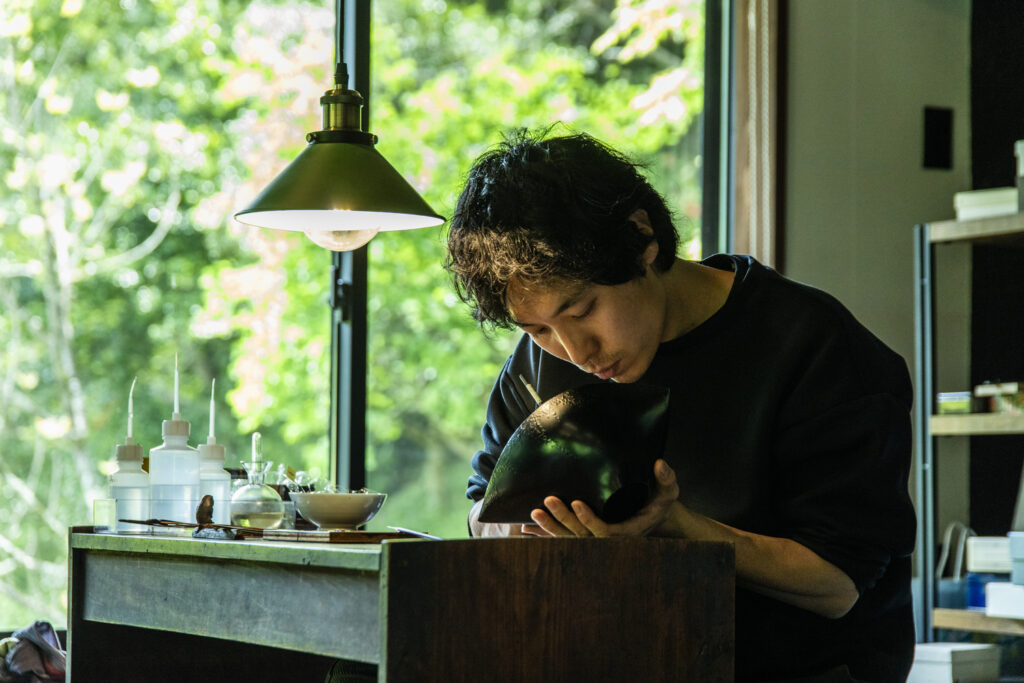
Tasuku Murose’s first solo exhibition, Crossing Mountains and Clouds, brings urushi into a contemporary landscape.
His works hold the movement of nature: clouds passing over mountains, water circulating between earth and sky, seasons shifting, weather gathering and dissolving.
The forms are quiet, but not still.
Seen in person, urushi reveals what photographs cannot fully carry: the depth of the surface, the movement of reflection, and the way light changes as the viewer moves.
As Murose’s first solo exhibition, it also offers a rare closeness to an artist still shaping his language through urushi, nature, and time.
At Lei Gallery Tokyo in Yoyogi-Uehara, the works are shown at a close distance, within the quiet setting of Lei In Praise of Shadows Flagship Store. The scale of the space allows the surface, light, and shadow of each work to be observed slowly.
For those visiting Tokyo, especially for the first time, the exhibition offers a quieter way to know Japanese culture.Not as spectacle.
But through presence.
Exhibition Information
Exhibition Title
Tasuku Murose Lacquer Exhibition: Crossing Mountains and Clouds
Dates
Saturday, June 27 – Saturday, July 4, 2026
Venue
Lei Gallery Tokyo
UEHARA TERRACE 1F, 1-30-12 Uehara, Shibuya-ku, Tokyo
Opening Hours
11:00–19:00 (Until 17:00 on the final day)
Artist in Attendance
The artist will be present throughout the exhibition.
Works
Works will be exhibited and available for purchase.
Admission
Free admission (No reservation required)
Further Reading
Ahead of His First Solo Exhibition, Crossing Mountains and Clouds | Urushi Artist Tasuku Murose
Before visiting the exhibition, read Tasuku Murose’s interview on urushi, weather, and the quiet uncertainty of a first solo exhibition.
Plan your visit to Lei Gallery Tokyo