
 Nobuaki Sato

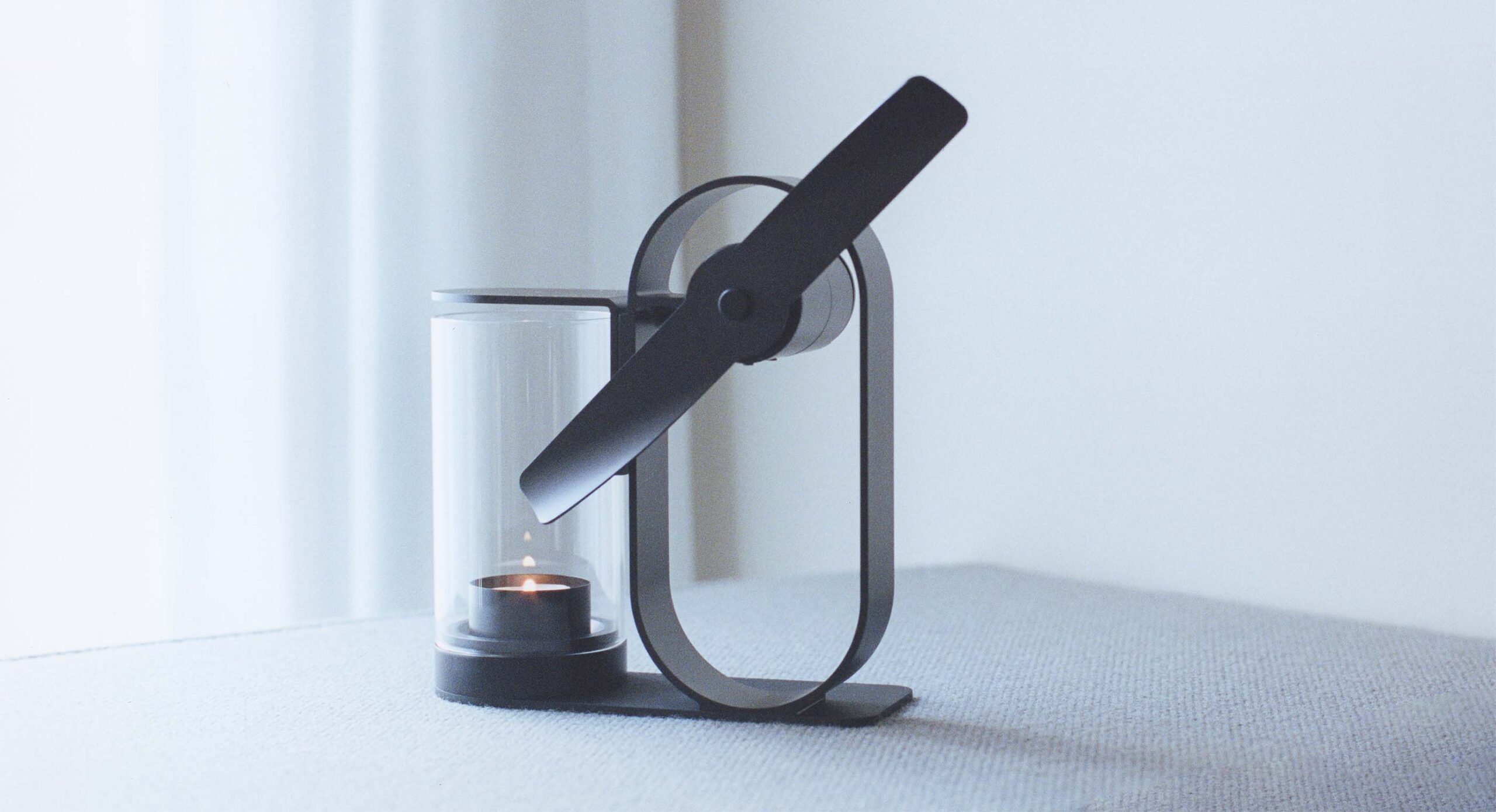


Ahead of his first solo exhibition opening on June 27 in Tokyo, Tasuku Murose reflects on urushi, weather, and what a first exhibition leaves exposed.
Some exhibitions arrive as declarations. Others arrive before they can be fully composed.
Crossing Mountains and Clouds, opening on June 27 at Lei In Praise of Shadows Flagship Store in Tokyo, belongs to the latter. As Tasuku Murose’s first solo exhibition, it brings forward not only years of accumulated work, but something more exposed: his present sensibility, the depth of urushi, the Japanese lacquer medium, and a lasting pull towards what does not stay still.
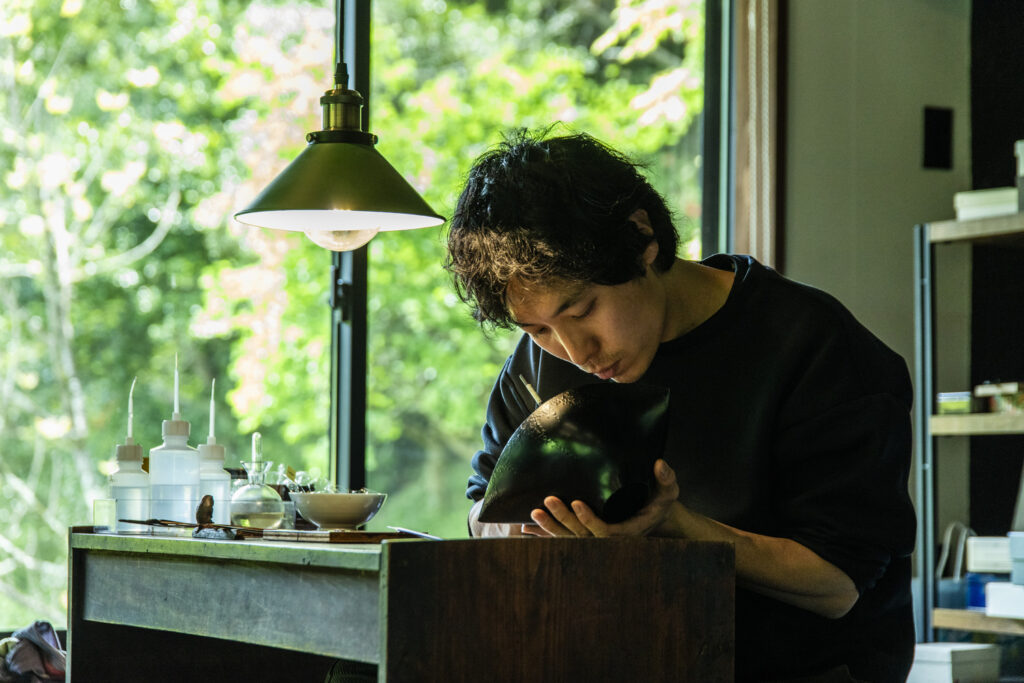
Tasuku Murose
Urushi artist. Working closely with the depth, instability, and quiet luminosity of urushi, he pursues forms that carry tension and aftertaste. In June 2026, he presents his first solo exhibition, Crossing Mountains and Clouds.
※He also supervised the wiped-urushi setting at Lei In Praise of Shadows Flagship Store.
What Remains Exposed
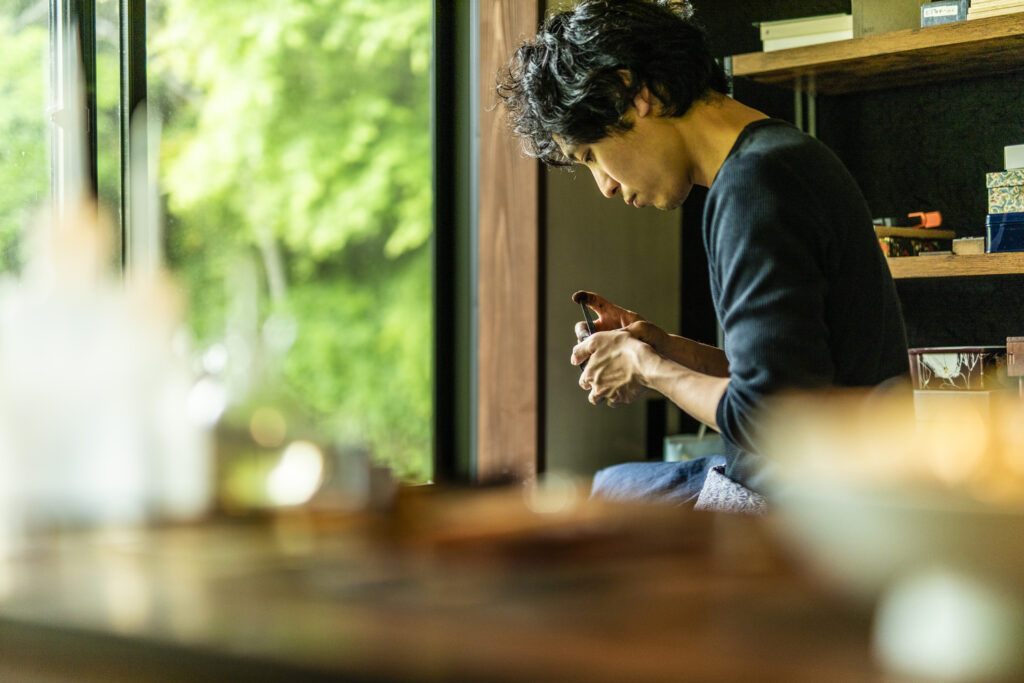
Sato: What kind of space do you think this exhibition will become?
Murose: I think this exhibition will reveal my current state more directly than any carefully arranged mode of presentation.
There are things a first solo exhibition cannot conceal. With time, perhaps one learns how to refine, protect, or frame what is shown. But this time, what comes forward first is simply where I am now — what I am holding, and what I am moving towards.
That is exactly why I want to face it without turning away.
The Unfinished Depth of Urushi
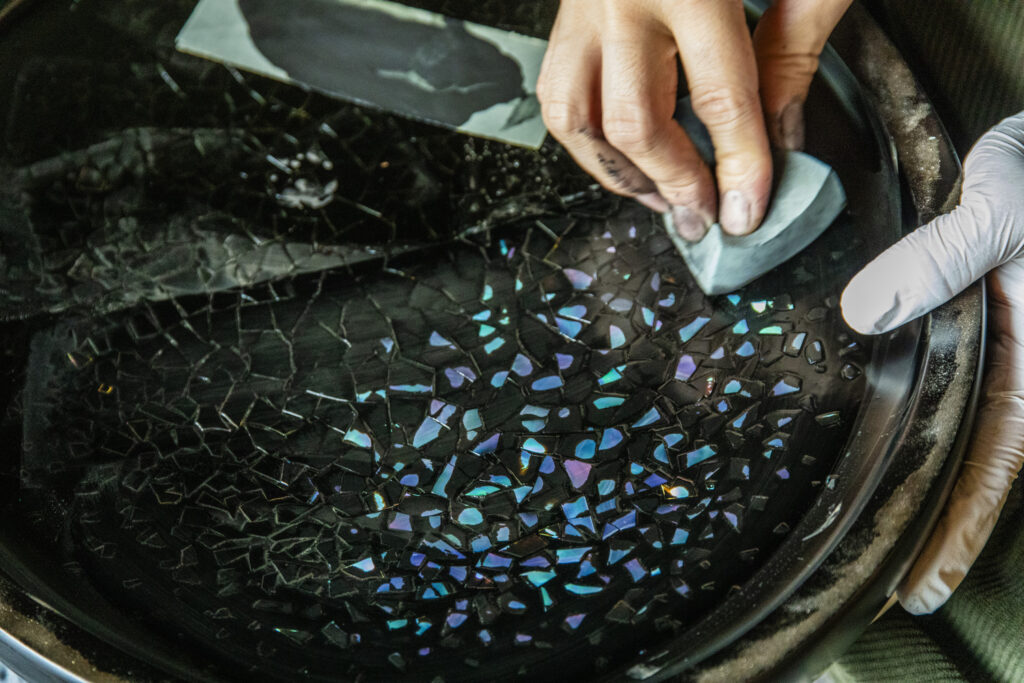
Sato: What kind of material is urushi to you?
Murose: I did not begin by seeing it as something exceptional. My family worked with urushi, so it was simply there, part of the world around me. At first, I did not fully understand either its strangeness or its force.
But over time, through meeting different people, I came to understand that this was not ordinary at all. In fact, the older I get, the more I feel I am being taught by the material itself — by its difficulty, its depth, and the singular beauty it carries.
Sato: And what keeps drawing you back to it?
Murose: There are many beautiful things in the world. But urushi is not simply beautiful. It has a distinct character of its own, and the more the hand develops, the more the material seems to answer back.
It is difficult. It resists you. It does not easily do as it is told. And precisely because of that, it feels inexhaustible. You keep thinking there must still be something further ahead.
Urushi is not arresting in an obvious way.
Yet through it, beauty can be pursued without end. As one’s sensitivity deepens, the material begins to disclose what had not yet been visible. That is where its force lies.
Beauty is not only about what appears refined or polished. It also includes the material’s irregularities, its depth, even its difficulty. Those things are part of what ultimately moves people.
Urushi has that kind of strong individuality.
There is nothing quite like it, and the more work you make, the more convinced you become that certain expressions can only emerge through this material.
That is why it never ends.
You keep feeling there must still be more ahead.
And the way it appears changes with the air around it. The same work can look different on a dry day and on a day filled with humidity. At times, it ceases to read as surface altogether, and seems to rise from somewhere further within. It does not merely reflect light; it seems to retain it, and return it with depth.
That is why, to me, urushi remains a material with no end.
Towards What Does Not Stay Still
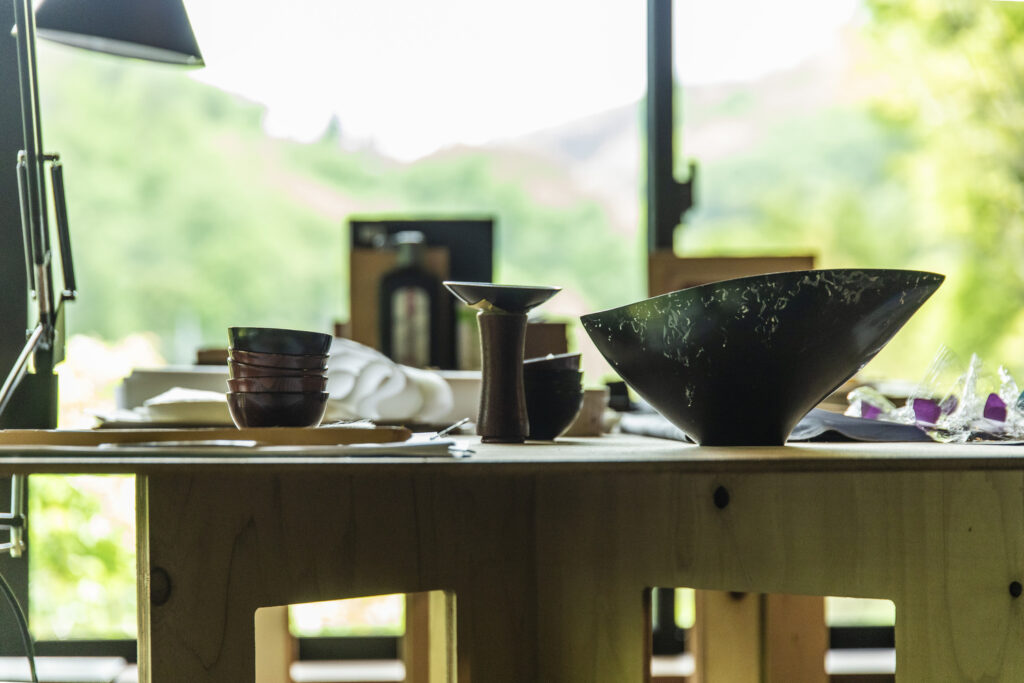
Sato: Where did the title Crossing Mountains and Clouds come from?
Murose: For the past few years, I have been drawn to things like plants — especially leaves. I keep returning to their shape, their slight tremor, and the way their surfaces hold light.
A leaf never stays the same. There is the bud, the full season, the fading, the fall. I think people are moved not by what remains unchanged, but by what continues to change.
And then there are clouds. Clouds, too, keep moving, changing shape without ever holding still. At times, they seem to reflect the feelings of the person looking at them. The sky may be the same, and yet it is never truly the same.
Clouds are one form of water, and water nurtures life through movement. It runs down from the mountain, becomes a river, and reaches the sea.
What draws me is not something fixed, but something kept alive through movement.
Water changes if it simply remains where it is.
It comes alive through flow. That sense of movement feels deeply connected to what I want to see, and also to what I want to make.
Sato: Does that also connect to the timing of the exhibition in June?
Murose: It does. I have always felt that my work has a certain affinity with rain. Generally, rain is treated as something to avoid, but I have always liked it.
There is a different presence to work seen in humid air. Rather than appearing sharply outlined, it seems to rise with a slight blur, a certain softness at the edges. I wanted this exhibition to open in a season when that could be felt.
Before Understanding
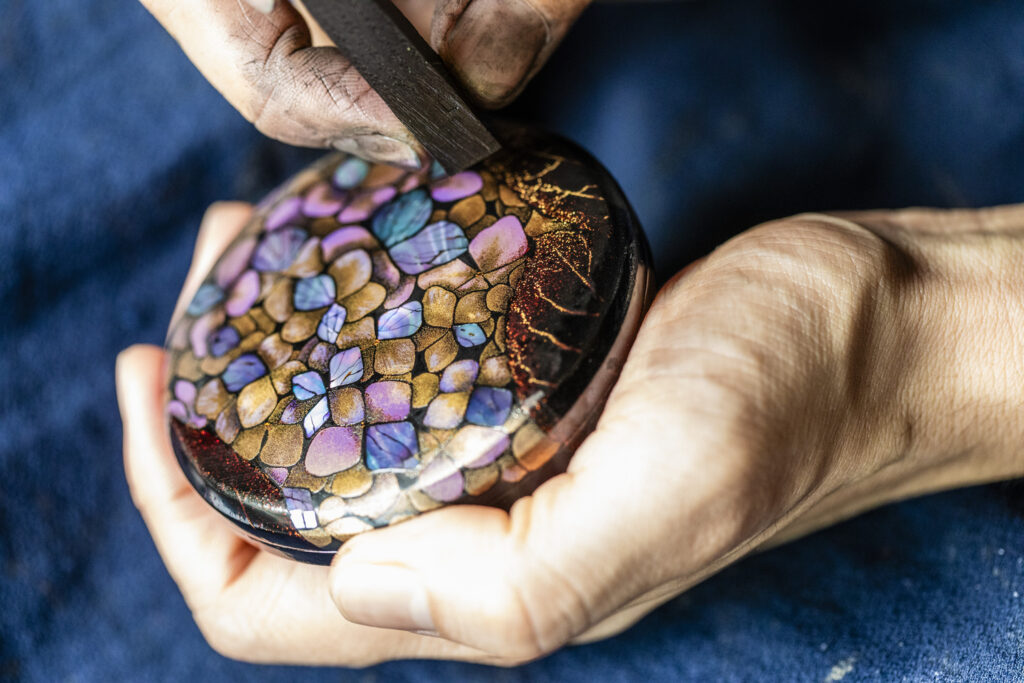
Sato: How do you hope people will encounter the work?
Murose: I hope they can meet it without too much preparation. Not by beginning with the idea of tradition or culture, but first as something simply there before them.
If it makes them feel calm, or makes them want to keep looking, or leaves behind a slight unease — that is enough. I am less interested in what someone understands than in what begins to move inside them while they are looking.
Sato: So it begins with one’s own senses.
Murose: Yes. What happens in someone while they are looking — how their feelings move, what remains afterward — that is what matters to me.
It is enough if someone simply finds it beautiful.
Quiet is enough. A slight unease may be enough.
If something remains after leaving, that is enough.
That is the kind of space I hope this exhibition can hold.
Exhibition Details
This exhibition marks Tasuku Murose’s first solo exhibition. The works gathered here can be encountered only during this exhibition period, and only in this form. Throughout the exhibition, visitors will have the opportunity to experience the work in the artist’s presence and speak with him directly. Assistance is available in English, Japanese, Italian, Spanish, Portuguese, and French.
Exhibition Title
Tasuku Murose Lacquer Exhibition: Crossing Mountains and Clouds
Dates
Saturday, June 27 – Saturday, July 4, 2026
Venue
Lei Gallery Tokyo
UEHARA TERRACE 1F, 1-30-12 Uehara, Shibuya-ku, Tokyo
Opening Hours
11:00–19:00 (Until 17:00 on the final day)
Artist in Attendance
The artist will be present throughout the exhibition.
Works
Works will be exhibited and available for purchase.
Admission
Free admission (No reservation required)