
 Nobuaki Sato

A conversation with KEIV product designer Eita Kamoshida ahead of a two-day interior exhibition at Lei In Praise of Shadows Flagship Store in Tokyo.
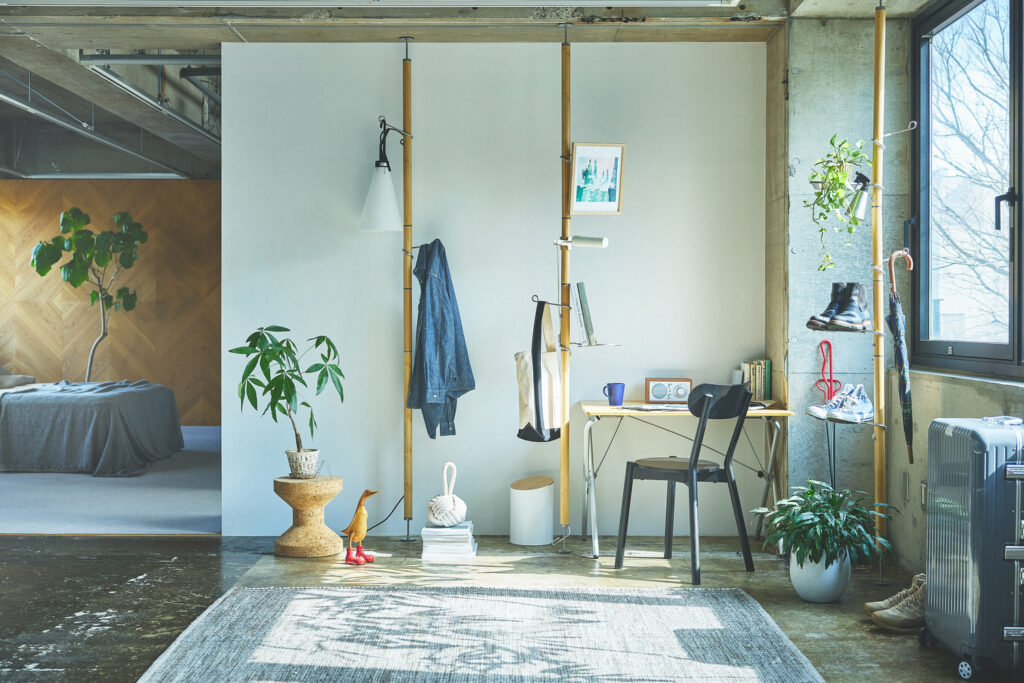
Furniture is often treated as something fixed. A shelf stands where it is placed. A table keeps its role. A room slowly gathers the habits of the person who lives there.
But our routines change.Shoes accumulate. Books arrive. The way we use a room begins to shift. What if furniture could respond to those small changes quietly, without becoming louder than the room itself?
On May 23 and 24, 2026, Lei In Praise of Shadows Flagship Store in Yoyogi-Uehara, Tokyo, will host a two-day exhibition by KEIV, a Japanese interior brand founded by designer Eita Kamoshida.
KEIV is guided by the idea of “100 Scapes Creation”: a way of thinking about how a single room can hold many possible arrangements, uses, and atmospheres. For this issue of Lei Journal, we spoke with Kamoshida about his beginnings as a designer, the thinking behind KEIV, and what visitors can experience in person during the exhibition.
Designing for the Everyday Room

Eita Kamoshida
Founder and product designer of KEIV. Kamoshida works across product planning, design, engineering, and production management, with a focus on objects for everyday use, including home goods, camping tools, and furniture. In 2026, he launched KEIV, an interior brand guided by the concept of “100 Scapes Creation.”
Sato:
Could you begin by telling us about your current work?
Kamoshida:
I work as the founder and designer of KEIV, while also continuing my work as an independent designer. In 2022, I started my own design practice. Since then, I have worked mainly on home goods and camping products, from planning and design to engineering and production management. Alongside that work, I launched KEIV in January 2026 as a brand where I can express the kind of living I have been thinking about.
Sato:
You work across a wide range of fields: home goods, camping products, furniture. Is there a common thread in what you do?
Kamoshida:
My main interest is the everyday room. So much of our time is spent at home, around meals, or inside familiar spaces. I think those moments are exactly where things can become richer, more comfortable, and more meaningful.
I do not feel strongly attached to one specific category. It could be furniture, a household object, or even something that is not a physical product. What matters to me is whether it belongs to everyday use.
Sato:
What first led you towards design?
Kamoshida:
My grandfather was a furniture craftsman. He had a workshop in Saitama, and I spent time there from a young age. Making things was always close to me.
I remember thinking that my grandfather was very cool. He was making things that supported people’s lives. The way he worked, the way he faced materials, and the things I learned from watching him have stayed with me as an important starting point.
Sato:
So making things was already part of your environment.
Kamoshida:
Yes. But I first learned about the profession of “designer” through a book I read when I was in elementary school. Because of my grandfather’s influence, I had always liked drawing and making things. Slowly, I became interested in work that involved creating objects.
Sato:
And later, you began to seriously pursue design.
Kamoshida:
When I entered university, I went to internships and met people who were seriously working in design. Being around them made me feel that I wanted to work in this field as well. But I do not think design is only about drawing beautiful forms or having strong sculptural ability.
I want to be someone who can see the whole process: the idea before an object exists, the design, the engineering, the production, the price, and the way it is communicated. All of those things are connected. I want to take an idea about living, give it form, and make sure it reaches people properly. That feeling connects directly to both my current work and KEIV.
Before Form, There Is a Reason
Sato:
When you design, what do you pay attention to first?
Kamoshida:
I begin by asking, “What is this?” I am not trying to make something new just for the sake of novelty. I think first about what will happen in someone’s life because this object exists. What kind of awareness or small shift might it bring? Putting that into words is important to me.
Sato:
So before the form, there is a reason for the object to exist.
Kamoshida:
Yes. Form, function, engineering, and price are all methods for carrying that reason. If the core is vague, even a visually refined object may not remain in someone’s room. But if the core is clear, you can begin to see what should be kept and what should be removed.
Sato:
Industrial design also comes with many constraints.
Kamoshida:
It does. Materials, cost, mass production. You can imagine many things, but in reality, there are always conditions.
For example, I might wish that a sheet of metal could bend more freely. But that is not something I can solve alone. It involves the people who develop materials, the factory, and the technology behind production. Within those limits, I have to decide how to combine form, function, price, and information. That is both the difficulty and the pleasure of design.
Sato:
In that sense, the reason at the beginning becomes even more important.
Kamoshida:
I think so. If you do not know what the core is, you get pulled around by the conditions. Should price come first? Should form come first? Should usability come first? Without a clear axis, you can lose sight of what you were making in the first place. That is why asking “What is this?” at the beginning also becomes a way to keep the work from drifting until the end.
A beautiful form is not enough on its own. Price, clarity, production, and the way the value is communicated all have to meet in the same place. An object is not finished when it is made. It begins to have meaning when it reaches someone’s hands and becomes part of their room.
Leaving Room for Change
Sato:
KEIV works with the concept of “100 Scapes Creation.” What does that phrase mean to you?
Kamoshida:
It comes from the experience of encountering different people, different places, and different values. Through those encounters, you begin to notice things you had not been able to see before. With the objects I make, I want to slightly change the way an everyday space is seen.
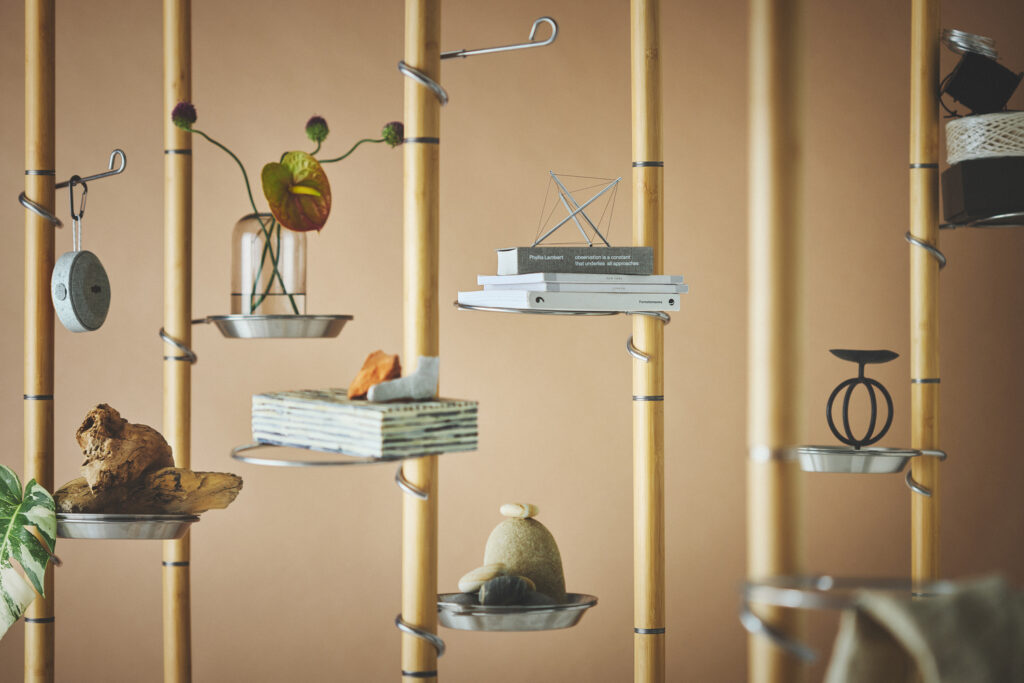
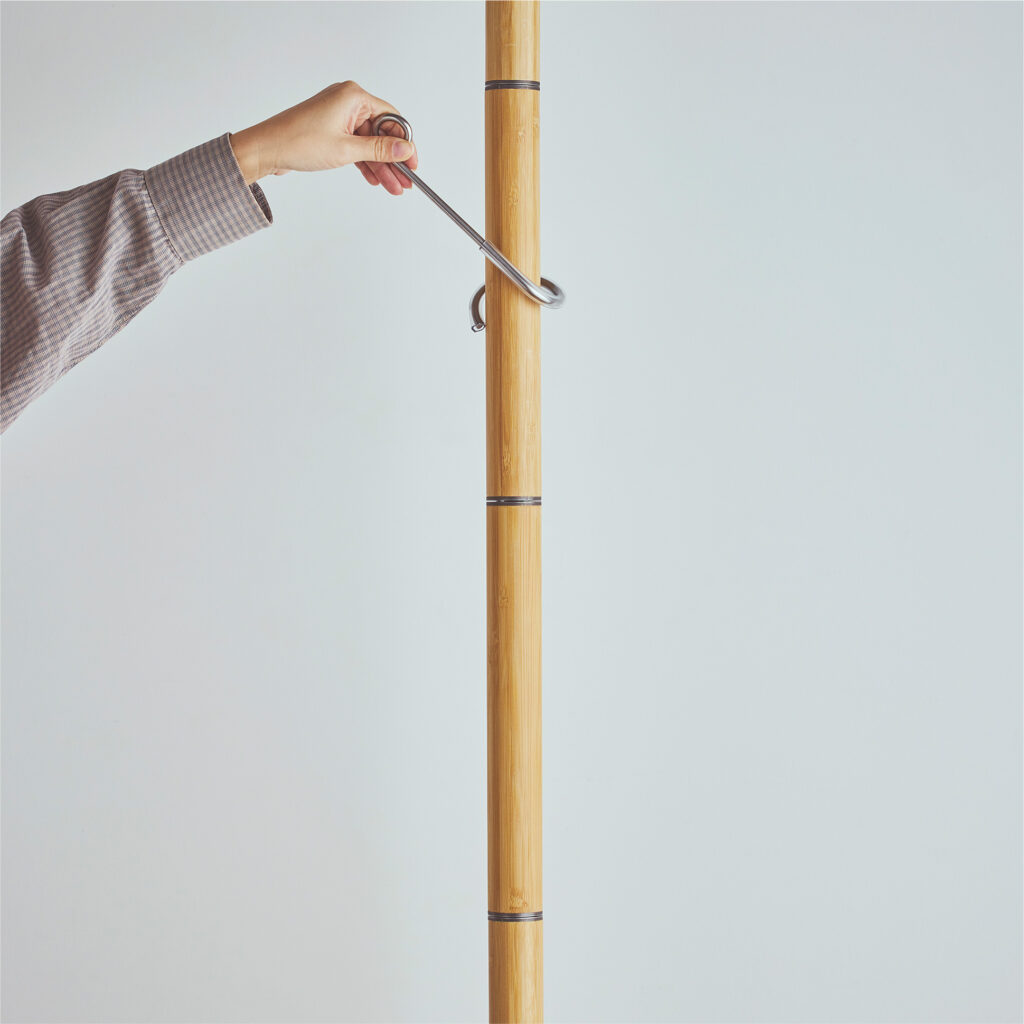
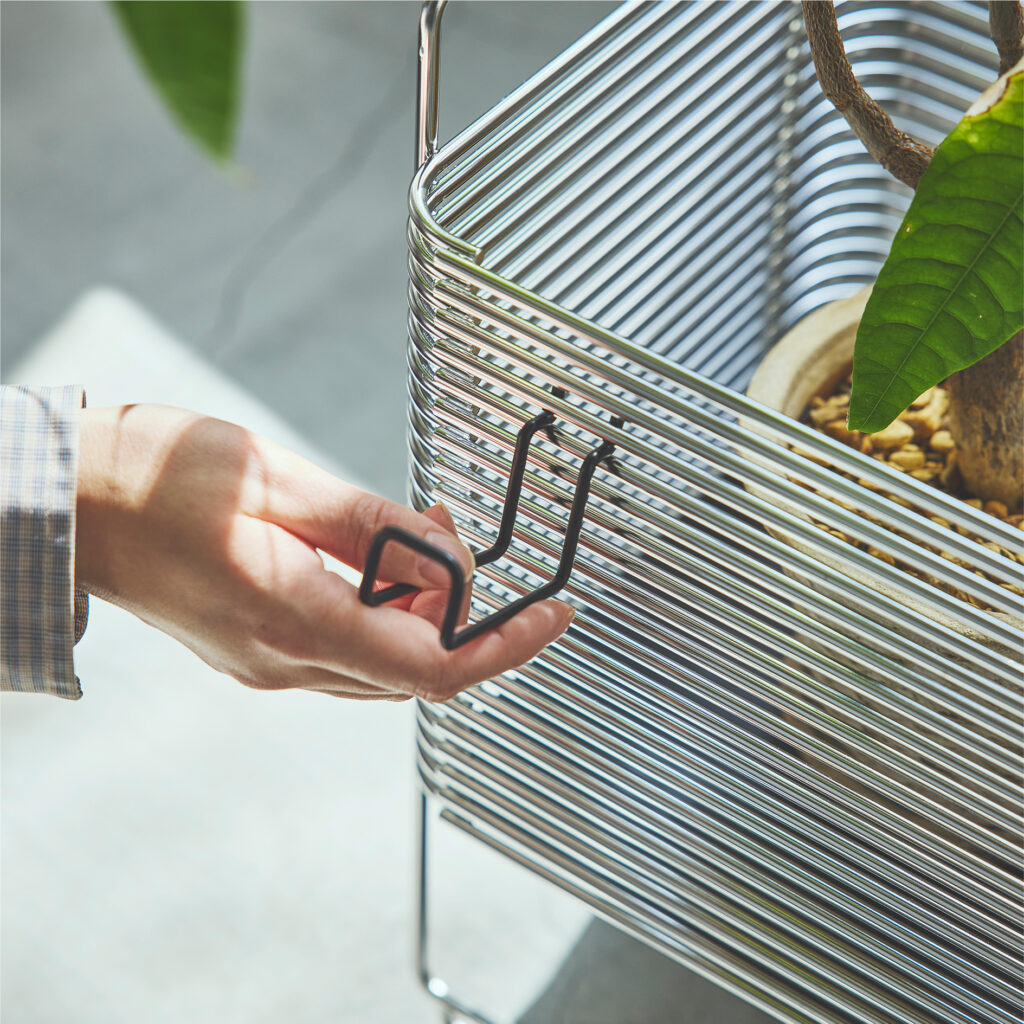
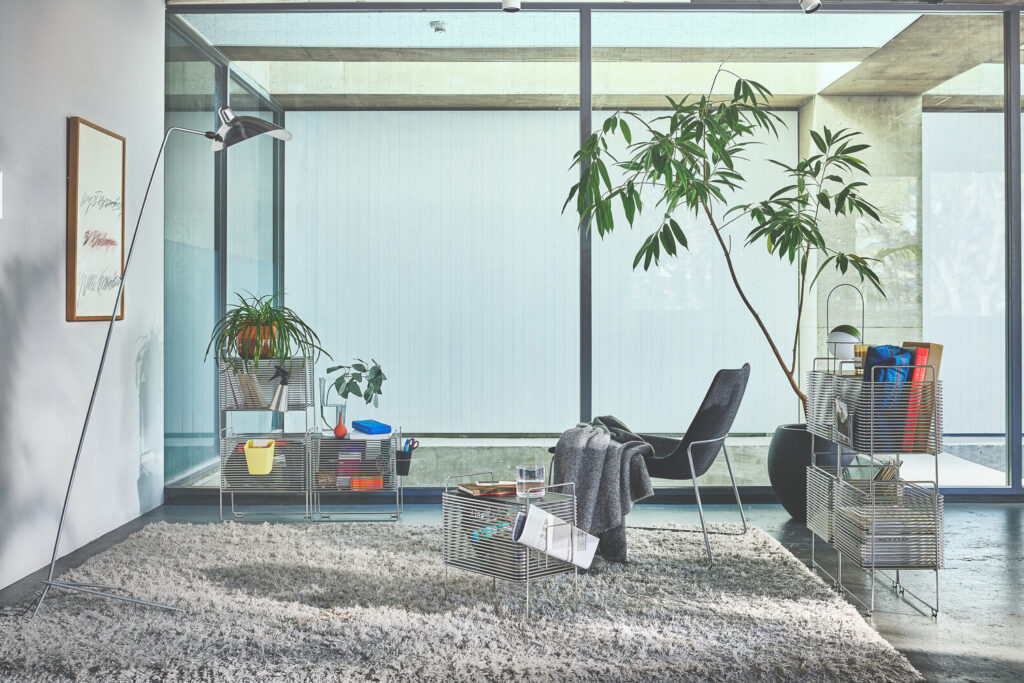
For example, if you have more shoes, you can change the height of the shelves. If you become interested in books, you can make room for them. You can change where things are placed. Instead of replacing furniture every time your routines change, you can change the relationship with what is already there. I want to continue making interior objects that allow that kind of use.
Sato:
So furniture does not have to remain fixed. It can change with the room.
Kamoshida:
Yes. Furniture is usually treated as something that does not move.
But the way we live keeps changing. Our age changes. Our interests change. The way we spend time in a room changes. So I began to wonder if furniture could also have a little more room to change.
Sato:
Your experience with camping products also connects to that idea.
Kamoshida:
Yes. Camping tools are designed to fold, transform, expand, and move. They are made for creating a place to eat, sleep, and live outside, so their mobility and adaptability are very carefully considered.
But if you bring that feeling directly into the home, it can become too much like equipment. I wanted to take the functionality of camping tools and express it more quietly as furniture. Easy to move. Easy to change. Easy to rearrange.
But visually, I wanted the pieces to remain calm, so that they could sit naturally inside a room. When someone moves their hands, the way the room is seen can shift slightly.
Within that small change, they may discover a use or an interest they had not noticed before. I want to create that kind of room for possibility within everyday life.
Sato:
KEIV also seems to have grown out of encounters with people.
Kamoshida:
Yes. The bamboo pieces and the wire shelf were not originally planned as products under KEIV. They gradually took shape through encounters with people at factories in China and Niigata.
I wanted to return what those people had given me through work. If someone has helped bring something into being, I feel responsible for sending it out into the world properly. That was one of the reasons I felt I needed to create a brand.
To See the Shift in Person
Sato:
On May 23 and 24, 2026, KEIV will hold an exhibition at Lei In Praise of Shadows Flagship Store. What would you want visitors to experience?
Kamoshida:
I would like visitors to experience the pieces not only by looking, but by touching them and speaking about them.
Why did this form appear? How can it change within a room? I hope people can feel those things in person. KEIV’s products are simple, so there are parts that may not be fully understood through photographs alone.
The thinness of the lines. The way shadows appear. The feeling of a room changing when you move your hands. Those are things that become clearer when you are standing in front of the object.
Sato:
At the exhibition, visitors will be able to see KEIV’s wire shelving (LU5 Series) and bamboo-based pieces (EP40 Series) that can respond to changes in space.
Kamoshida:
Yes. Rather than seeing the product alone, I would like people to see how it appears when it is placed in a specific room. Changing the way a room is seen does not always mean making a large change. Sometimes it is simply moving your hands a little and changing the relationship between yourself and a familiar space.
How would this work in my own home? What kind of space could it open up?
I hope the exhibition becomes a time for visitors to imagine that while seeing and touching the pieces in person.
KEIV Exhibition
Date: May 23–24, 2026
Venue: Lei In Praise of Shadows Flagship Store
Address: UEHARA TERRACE 1F, 1-30-12 Uehara, Shibuya-ku, Tokyo 151-0064, Japan
Designer in attendance: Eita Kamoshida
Works on view: KEIV wire shelving, bamboo-based adaptable interior pieces, and related works
Purchase: Visitors may inquire about purchasing exhibited works at the venue.